

10 Simple Effective Ways to Cat Proof Your Fence 2025 Guide
For cat owners, a secure backyard is a sanctuary—a place where your feline friend can enjoy fresh air and sunshine without the dangers of roaming free. The challenge? Most standard fences are mere suggestions to a determined cat. As pet safety experts, we understand the anxiety of a potential escape. This comprehensive guide details ten proven methods to cat-proof your fence, from simple DIY tricks to professional-grade systems. We’ll help you assess your needs, budget, and your cat’s personality to find the perfect solution for a safe and happy outdoor experience.
Why Cat-Proofing Your Fence is Essential
Allowing your cat unsupervised access to the great outdoors exposes them to significant risks: traffic, predators, diseases, toxins, and the chance of getting lost. A cat-proofed fence, often called a “catio” enclosure or containment system, transforms your yard into a controlled, safe environment. It protects not only your cat but also local wildlife. The goal is to create a barrier that is physically and psychologically effective, ensuring your cat’s curiosity doesn’t lead them into danger. The following methods are ranked from simple, low-cost deterrents to more permanent, full-containment solutions.
1. Install a Dedicated Cat Fence Topper
This is one of the most effective and popular solutions for modifying an existing fence. A fence topper is a netting or mesh barrier that angles inward at the top of your fence, creating an overhang that makes it nearly impossible for a cat to climb over. The angled design utilizes a cat’s own instincts; they are excellent at climbing upwards but struggle when the top surface is unstable or bends back toward them.
Best for: Owners with existing wood, vinyl, or chain-link fences who want a permanent, highly effective solution.
Key Considerations: Ensure the mesh is strong, UV-resistant, and securely attached with sturdy poles and brackets. The inward angle (typically 45 degrees) is crucial for success.
PURR…FECT Fence Conversion System
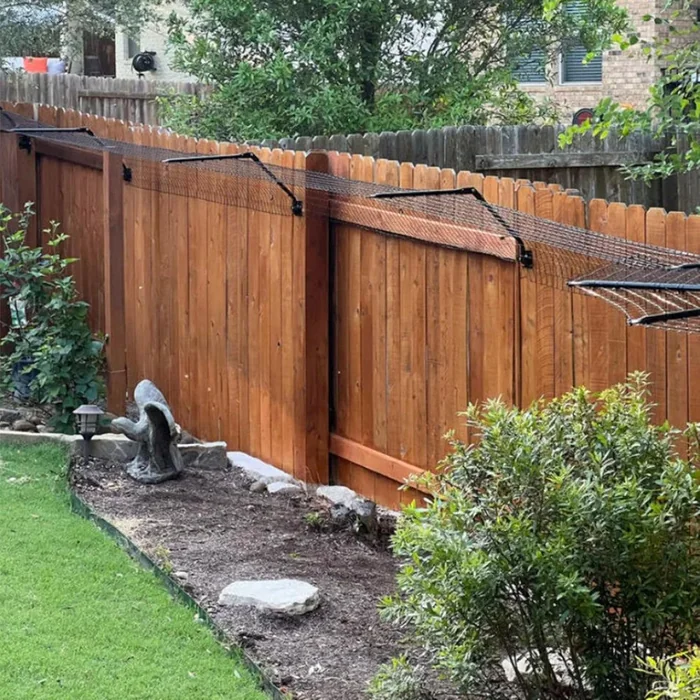
PURR…FECT Fence Conversion System for Cats – Cat-Proof Steel Toppers for Existing Outdoor Fencing, Containment Barrier For Wood, Chain Link, Metal, Brick, & Vinyl Fences 5′ Tall or Higher, 50 Foot Kit
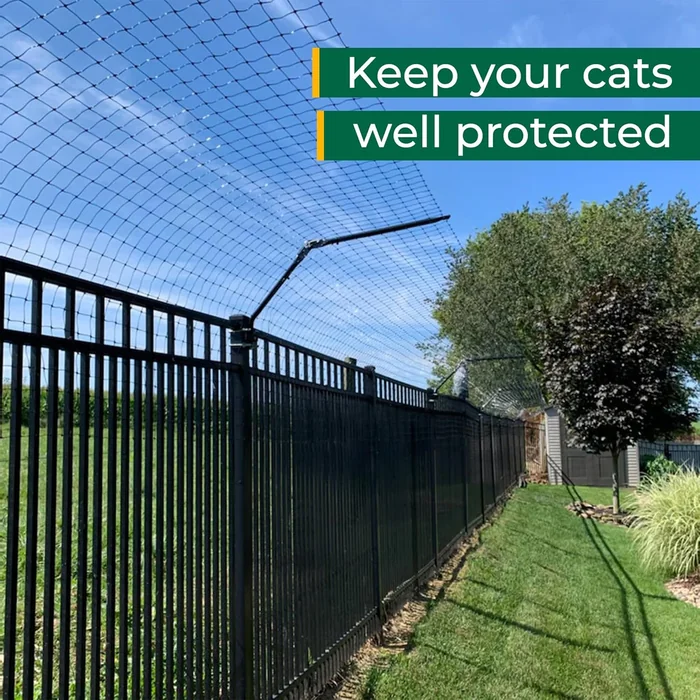
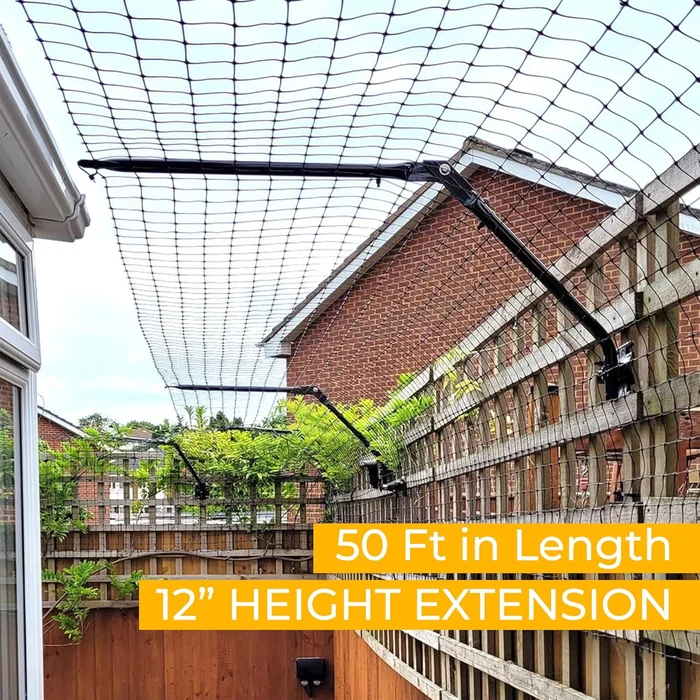
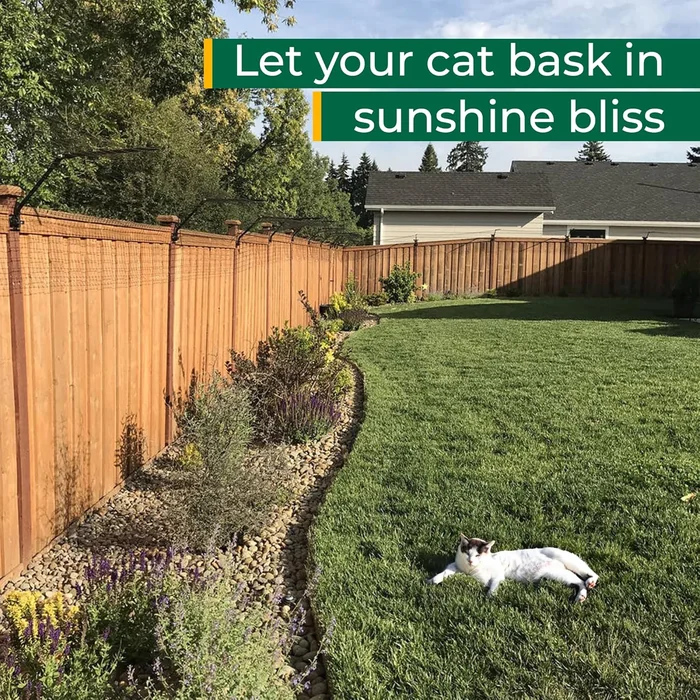
Key Features:
- THE PURRFECT PROTECTIVE ENCLOSURE: The PURR…FECT Fence features a unique patented design that works with 99.9 percent of fence types and configurations, converting wood, chain link, metal, vinyl, brick, or block fences into escape-proof cat barriers
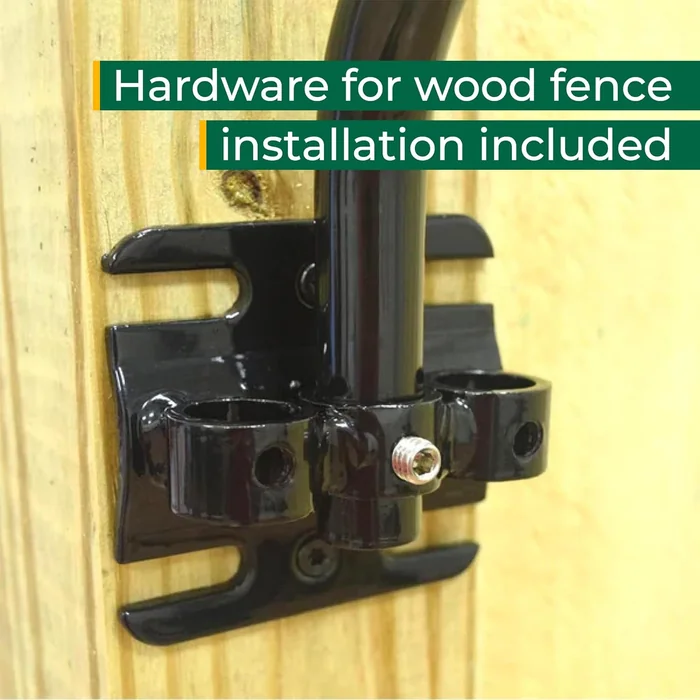
- HEAVY-DUTY ALL-WEATHER DESIGN: Outsmart even the most skilled escape artists with heavy-gauge black powder-coated galvanized steel components, stainless steel hardware and springs, and UV-stabilized material with a 600 pound breaking strength
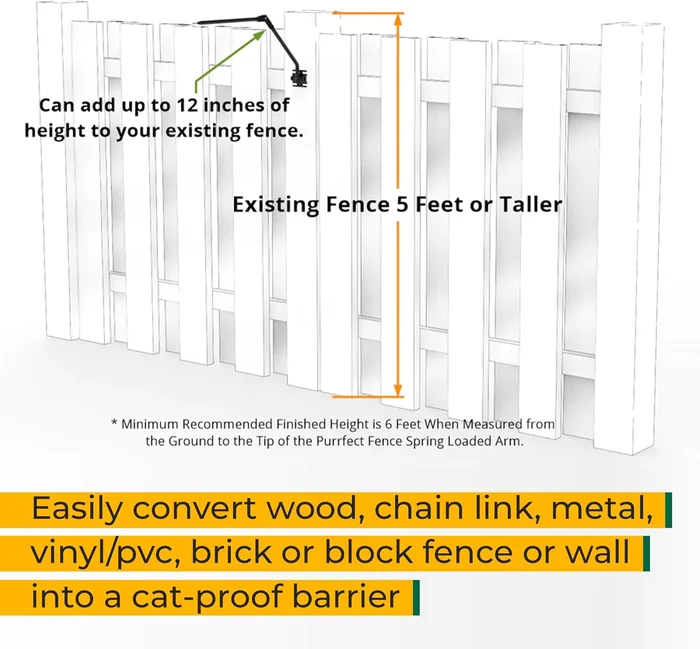
- MOUNTING INSTRUCTIONS: For optimal effectiveness, the system should have a finished height of at least 6 feet, and it is mountable as low as 5 feet on an existing fence, measured either from the ground up or from the top of any leaping surface to the tip of the arm
When looking for a top-tier, professional fence topper, the PURR…FECT Fence Conversion System is a market leader. Its patented design is renowned for compatibility, working with over 99% of fence types including wood, chain link, metal, and brick. We recommend it for its heavy-duty construction: it uses powder-coated galvanized steel arms, stainless steel hardware, and a UV-stabilized netting with a 600-pound breaking strength. For optimal effectiveness, the system should create a total barrier height of at least 6 feet. It’s a significant investment at $299.99 for a 50-foot kit, but its durability and proven success rate make it a worthwhile long-term solution for keeping even the most adept escape artists safely contained, as reflected in its positive user reviews.
2. Add a Roller Bar System
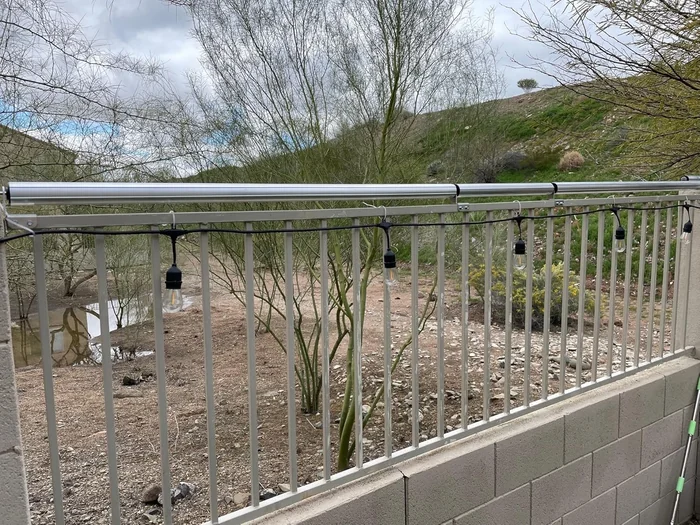
A roller bar, like the famous Coyote Roller, is a brilliantly simple mechanical deterrent. It consists of a freely rotating tube installed along the top of your fence. When a cat or other animal tries to gain a grip on the fence top to pull themselves over, the tube spins, denying them the stable footing they need. It’s a passive, humane, and low-maintenance option.
Best for: Flat-topped fences (wrought iron, vinyl, wood). Also excellent for deterring other animals like raccoons, coyotes, and neighboring dogs.
Key Considerations: Proper installation is key to ensure smooth rotation. It doesn’t enclose the yard but acts as a highly effective top barrier.
Coyote Roller 8-Foot Kit
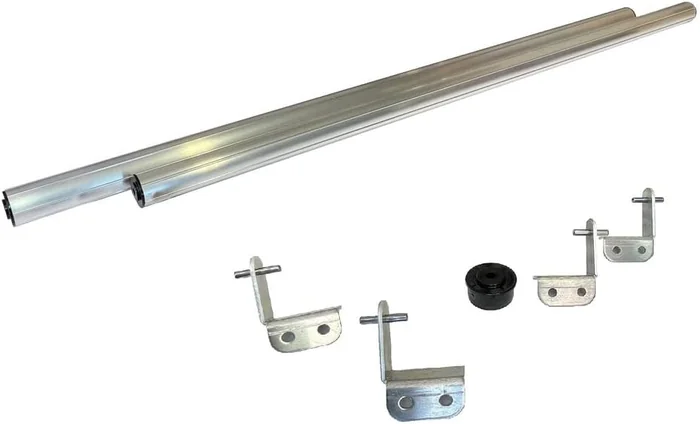
8 Foot Kit – Keep Pets Contained, Coyotes Away – Cats, Dogs, Coyotes, Bird Repellent – Wrought Iron/Vinyl/Wood Flat Top
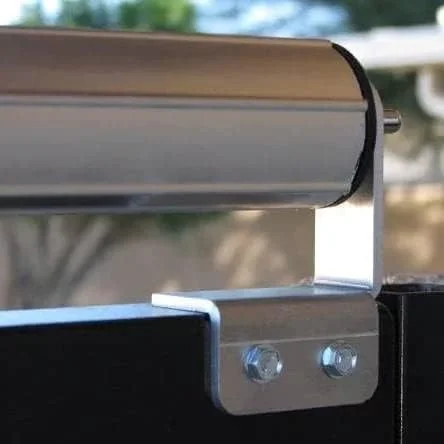
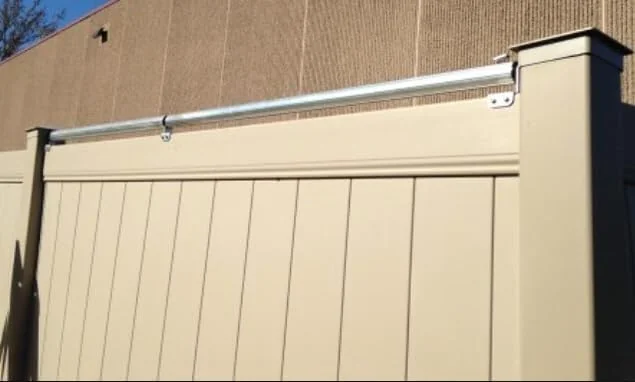

Key Features:
The Coyote Roller is the original product in this category and remains a top choice. The 8-foot kit, priced at $138.99, provides a scalable solution. Its design is elegantly simple—a PVC pipe that rotates on a galvanized steel axle—making it incredibly reliable with no moving parts to break. It’s an excellent choice if your primary goal is to prevent animals from getting a foothold on the *top* of your existing fence. Users report high success rates not just with cats, but also in keeping pests like coyotes out. It’s a more affordable physical barrier than a full enclosure system and blends discreetly with most fence styles.
3. Use a Wireless Pet Containment System
Wireless containment systems create an invisible boundary using a central transmitter and a receiver collar worn by your pet. When the cat approaches the set boundary, the collar emits a warning beep. If they continue, it delivers a safe but startling static correction. This method trains the cat to stay within a defined zone.
Important Note: These systems are more commonly and reliably used with dogs. Cats can be more stubborn and may run through the correction if frightened. It requires consistent, patient training and is not a physical barrier against other animals entering your yard.
Best for: Tech-savvy owners with large, open yards and a cat that is responsive to training. It’s not suitable for all feline personalities.
PetSafe Wireless Pet Containment System
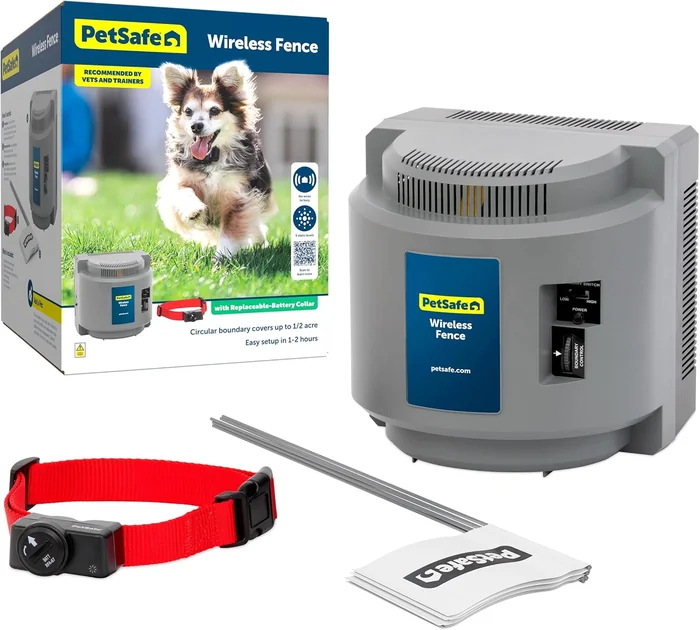
PetSafe Wireless Pet Containment System – Original Wireless Electric Fence for Dogs – Covers Up to 1/2 Acre – for Pets 8lb+


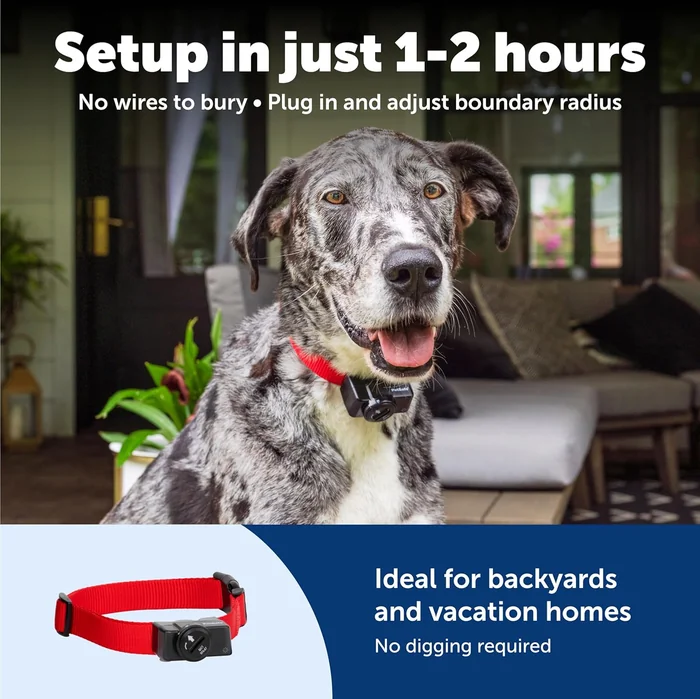

Key Features:
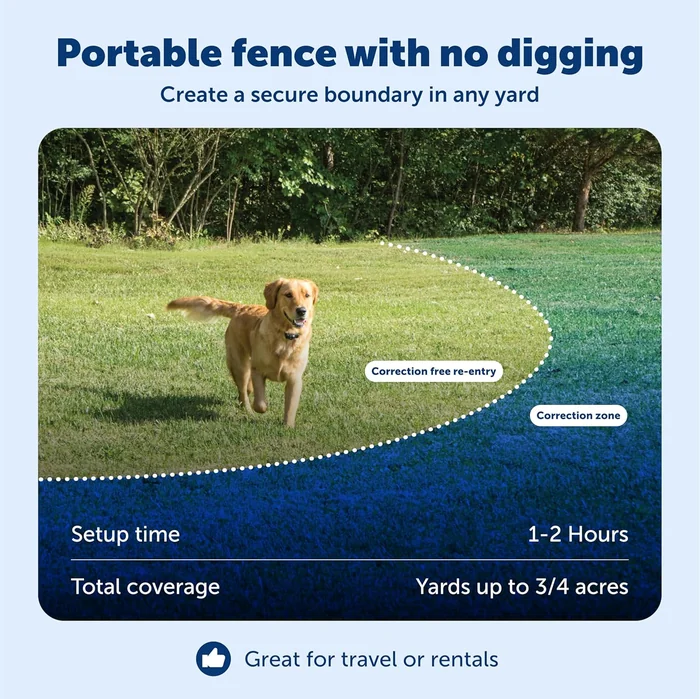
- Wireless Freedom: The PetSafe Wireless Pet Containment System is a lightweight, travel-friendly system that sets up in 1-2 hours with a circular boundary covering up to 1/2 acre; no digging required
- Safe Wireless Fence: With 5 adjustable correction levels, a tone-only training mode, and static-free reentry, this static collar tailors to your dog’s temperament and reinforces positive behavior
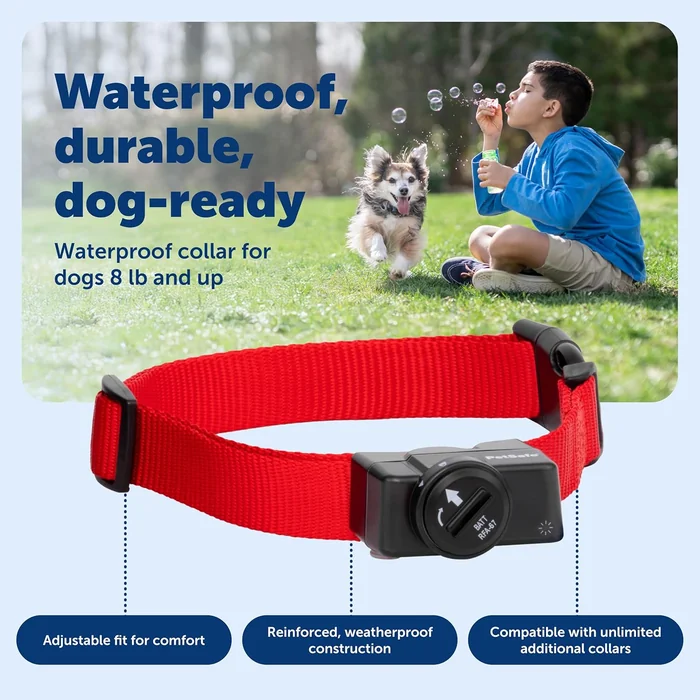
- Adjustable Neck Collar: The waterproof, rechargeable receiver collar fits dogs more than 6 months old weighing at least 8 lbs and offers adjustable neck sizes from 6-28 in
For owners considering an invisible boundary, the PetSafe Wireless Pet Containment System is a reputable and widely-used option. Its major advantage is easy setup with no digging required; the circular boundary can cover up to 1/2 acre from a single transmitter. The collar offers 5 adjustable correction levels and a tone-only training mode, which we always recommend starting with. It’s waterproof and rechargeable. Priced at $289.99, its effectiveness is backed by a massive number of user experiences (over 14,000 reviews). However, we urge caution with cats. Success depends entirely on individual temperament and dedicated training sessions. It should not be used as a sole containment method for cats prone to bolting.
4. Create a PVC Pipe Overhang (DIY Roller)
This is a cost-effective DIY version of the commercial roller bar. By sliding a length of wide PVC pipe over the top wire or rail of a chain-link fence, you create a similar spinning deterrent. Secure it so it can rotate freely but cannot slide off the ends.
Best for: Chain-link fences on a tight budget. It’s a quick weekend project.
Key Considerations: Use schedule 40 PVC (4-inch diameter or larger works well). Ensure the pipe rotates easily. This may not be as aesthetically pleasing or durable as a commercial product but is a fantastic proof-of-concept.
5. Install Commercial Cat Netting
Different from an angled topper, this involves enclosing the entire top of your yard with heavy-duty polyethylene netting, supported by posts. It creates a fully enclosed “aviary” style space over your entire patio or yard section.
Best for: Creating a fully enclosed catio space over a patio or section of the yard, not just topping a perimeter fence.
Key Considerations: Requires a sturdy frame (often using wooden or metal posts). Mesh size should be small enough to prevent a cat’s head from getting through (under 2 inches). Ensure it can withstand local weather conditions.
6. Utilize Plastic Spikes or Bird Spikes
Strips of blunt plastic spikes can be installed along the top of fence posts and flat surfaces. They don’t harm the cat but create an uncomfortable surface that discourages perching or walking along the fence top. They are a psychological barrier.
Best for: Deterring cats from specific jumping-off points like gate posts, narrow fence tops, or walls.
Key Considerations: Choose blunt, humane spikes designed for pest control. They are not a full containment solution but can be a useful component in a broader strategy.
7. Plant Cat-Deterrent Greenery
Strategic landscaping can act as a natural fence line deterrent. Planting thick, prickly bushes like rosemary, barberry, or holly along the base of your fence can make the approach and climb-up point less appealing. Cats generally dislike the smell of plants like lavender, lemon thyme, and pennyroyal.
Best for: Supplementing physical barriers and enhancing garden aesthetics. It’s a soft, natural approach.
Key Considerations: Ensure any plants you use are non-toxic to cats. This method is not reliable on its own but can enhance other barriers.
8. Apply Motion-Activated Sprinklers or Deterrents
Devices like motion-activated sprinklers (e.g., ScareCrow) startle a cat with a sudden burst of water when they approach a specific zone near the fence. Ultrasonic deterrents emit a high-frequency sound unpleasant to cats (but inaudible to most humans) when motion is detected.
Best for: Protecting specific “hot spot” areas where your cat consistently attempts to climb. Good for keeping other animals out as well.
Key Considerations: Effectiveness can wane as cats may become habituated. Requires a water source or batteries. Best used as a temporary training aid or in conjunction with physical barriers.
9. Build a Fully Enclosed “Catio”
A catio is a dedicated outdoor enclosure, often attached to a window or door, that provides the ultimate safe experience. It can range from a small window box to a large, walk-in structure. You can build one yourself using wood and wire mesh or purchase modular kits.
Best for: Owners who want to give their cat guaranteed safe outdoor access without modifying their entire perimeter fence.
Key Considerations: Provides enrichment and safety but limits free-roaming in the entire yard. Consider adding shelves, perches, and shade. Learn more about creating the perfect enrichment space in our guide to indoor cat trees and shelves How to Litter Train a Cat?A Stress-Free Guide for Kittens and Adult Cats.
10. Use Temporary Playpens for Supervised Time
For kittens, elderly cats, or supervised play sessions, a portable outdoor playpen made of mesh and pop-up frames can be a great solution. It’s not a permanent fence modification but allows for safe, controlled outdoor time.
Best for: Temporary, supervised outdoor enjoyment. Travel or small patios.
Key Considerations: Always supervise your cat in a playpen. Ensure it is sturdy and weighted down to prevent tipping. The zipper closures must be secure.
Choosing the Right Method for Your Home and Cat
Selecting the best cat-proofing strategy depends on several factors:
- Your Cat’s Personality: Is your cat a lazy lounger or an athletic escape artist? Determined climbers need robust solutions like the PURR…FECT Fence or Coyote Rollers.
- Fence Type & Height: Chain-link fences are ideal for toppers and rollers. Solid privacy fences may require an overhang system. The minimum effective total height should be at least 6 feet.
- Budget: Solutions range from DIY PVC pipes ($) to full professional installations ($$$). Determine your long-term investment level.
- Aesthetics: Consider how the solution will look. Roller bars and black mesh toppers tend to be more discreet than bright netting.
Remember, the safety of the materials is paramount. Avoid anything with sharp edges, toxic coatings, or small gaps where a cat could get a paw stuck. For more tips on creating a holistic safe home environment, explore our article on essential kitten-proofing your home How Often Should You Change Cat Litter?A Vet-Reviewed Guide.
Installation Tips & Safety Checklist
Proper installation is as important as choosing the right product.
- Inspect Your Fence: Repair any loose boards, rusted metal, or unstable posts before adding any cat-proofing elements.
- Check for Climb-Aids: Remove objects near the fence like planters, tables, or low tree branches that could serve as launching pads.
- Secure All Hardware: Use stainless steel or galvanized hardware to prevent rust. Ensure all brackets, poles, and netting are taut and firmly attached.
- Test the Barrier: Before letting your cat out unsupervised, gently press on the barrier to simulate a cat’s weight and look for any sagging or potential weak points.
- Supervise Initial Outings: Accompany your cat during their first few sessions in the secured yard to observe their behavior and ensure the system works as intended.
Conclusion: Peace of Mind in a Secure Yard
Cat-proofing your fence is an act of love, providing your feline companion with the enrichment of the outdoors while eliminating its risks. Whether you opt for a commercial powerhouse like the PURR…FECT Fence, a clever mechanical deterrent like the Coyote Roller, or even a carefully trained wireless boundary, the goal is the same: a happy cat and a relaxed owner. By assessing your needs and implementing one or more of these ten methods, you can create a backyard paradise that is both a playground and a fortress. For other pet safety essentials, don’t miss our review of the best GPS trackers for adventurous cats How Many Litter Boxes Per Cat?The Ultimate Guide for a Happy Home, the perfect backup for any containment system.
View Comments (0)