Kann ich meinem Katzen Reis geben? Ein Veterinär-Approved Safety & Feeding Guide
Ja, Sie können Ihrem Kätzchen Reis geben, aber es muss mit großer Vorsicht und unter den richtigen Umständen getan werden. Einfacher, gekochter weißer Reis ist nicht giftig und kann manchmal als vorübergehendes Bindemittel für ein Kätzchen mit einem Magenverletzungen verwendet werden. Allerdings ist es Nicht ein notwendiger oder idealer Teil der Ernährung eines Kätzchen.. Kätzchen sind obligatorische Fleischfresser, was bedeutet, dass ihre primären Ernährungsbedürfnisse durch hochwertiges, proteinreiches Kätzchenfutter erfüllt werden müssen. Reis bietet keine essentiellen Nährstoffe, die sie nicht aus ihrer spezialisierten Ernährung erhalten können, und wenn sie falsch gefüttert werden, kann dies zu Nährstoffmangel, Verdauungsstörungen oder Gewichtszunahme führen. Dieser Leitfaden, der von tierärztlicher Expertise informiert wird, führt Sie durch die sicheren Protokolle, präzise Portionen und kritische Szenarien, in denen Reis für Ihre wachsende Katze geeignet sein könnte oder nicht.
Die Sicherheit von Reis für Kätzchen hängt vollständig von Zubereitung, Portion und Zweck ab. In seiner einfachsten Form - vollständig gekochten, einfachen und gekühlten weißen Reis - ist es für ein gesundes Kätzchen im Allgemeinen sicher, eine winzige Menge zu konsumieren. Betrachten Sie es als gelegentliches Zusatzmittel, nicht als Mahlzeit. Das Kernprinzip ist, dass die primäre Ernährung eines Kätzchen (über 90%) ein vollständiges und ausgewogenes kommerzielles Kätzchenfutter sein muss, das für schnelles Wachstum und Entwicklung formuliert ist. Reis sollte das nie ersetzen. Die bedeutenden Risiken entstehen aus der falschen Fütterung von Reis: Gewürze es (Zwiebeln, Knoblauch und Salz sind giftig), bieten es ungekocht (was nicht verdaulich ist) oder erlauben es, ein regelmäßiger Bestandteil ihrer Ernährung zu werden, verdrängen lebenswichtige tierische Proteine und Fette.
Nährstoff-Ausbruch: Was ist eigentlich im Reis?
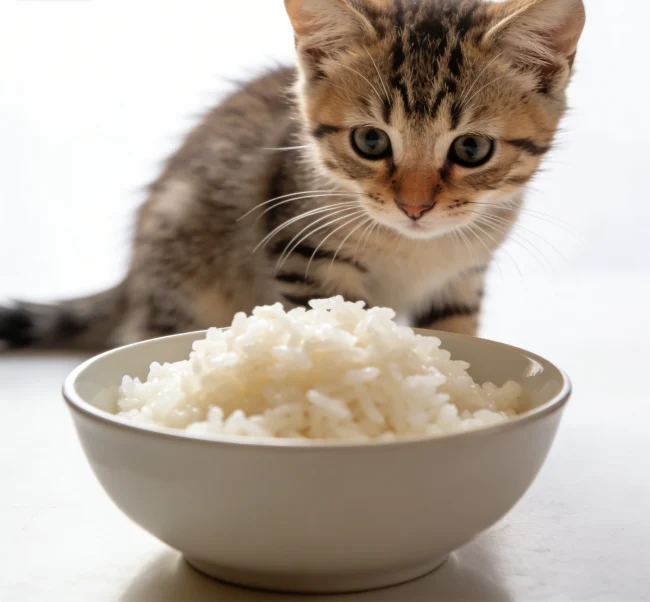
Um zu verstehen, warum Reis bestenfalls ein ergänzendes Nahrungsmittel ist, müssen wir uns sein Nährstoffprofil anschauen. Kätzchen benötigen hohe Mengen an tierischem Protein (für das Muskelwachstum), spezifischen Aminosäuren wie Taurin (für die Gesundheit des Herzens und der Augen), Fetten, Vitaminen und Mineralien. Reis ist in erster Linie eine Quelle für Kohlenhydrate.
| Nährstoff (pro 100 g gekochten weißen Reis) | Betrag | Relevanz für Kittens |
|---|---|---|
| Kohlenhydrate | 28 g | Lieferet Energie, aber Kätzchen erhalten Energie effizienter aus Protein und Fett. |
| Protein | 2.7g | Niedrigwertiges, pflanzliches Protein ohne essentielle Aminosäuren wie Taurin. |
| Fett | 0.3g | Vernachlässigbar; Kätzchen benötigen Fette für die Entwicklung des Gehirns und Energie. |
| Fibern | 0.4g | Minimal; brauner Reis hat mehr, was für den empfindlichen Darm eines Katzens zu hart sein kann. |
Weißer vs. brauner Reis: Während brauner Reis aufgrund von mehr Ballaststoffen und Nährstoffen für den Menschen oft als gesünder angesehen wird, ist er für Kätzchen nicht überlegen. Die zusätzlichen Ballaststoffe können Gas oder Durchfall bei jungen Katzen verursachen. Noch kritischer ist, brauner Reis hat höhere Mengen an Arsen, einem Schwermetall, das sich im Laufe der Zeit ansammeln kann. Für ein kleines, sich entwickelndes Kätzchen ist es ratsam, dieses potenzielle Risiko vollständig zu vermeiden und bei Verwendung mit einfachem weißen Reis zu bleiben.
Potenzielle Vorteile vs. Risiken für wachsende Kätzchen
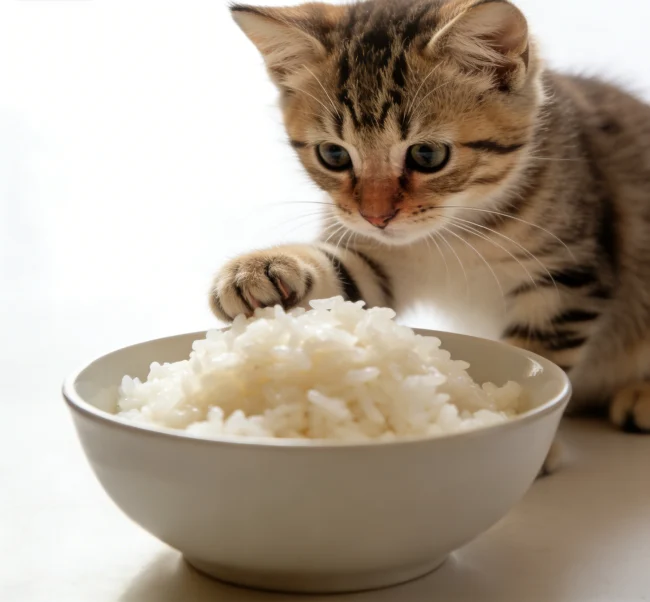
Es ist entscheidend, die sehr begrenzten potenziellen Vorteile gegen die tatsächlichen Risiken zu gewichten.
Potenzielle Vorteile (kontextspezifisch):
Bedeutende Risiken:
Schritt-für-Schritt: Wie man Reis sicher zu Ihrem Kätzchen einführt
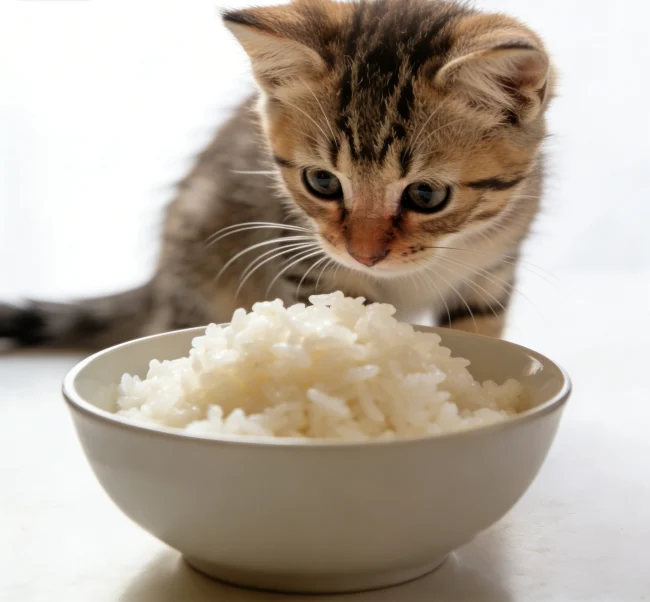
Wenn Ihr Tierarzt Reis aus einem bestimmten Grund empfohlen hat, befolgen Sie dieses genaue Protokoll.
Wichtige Szenarien & FAQs
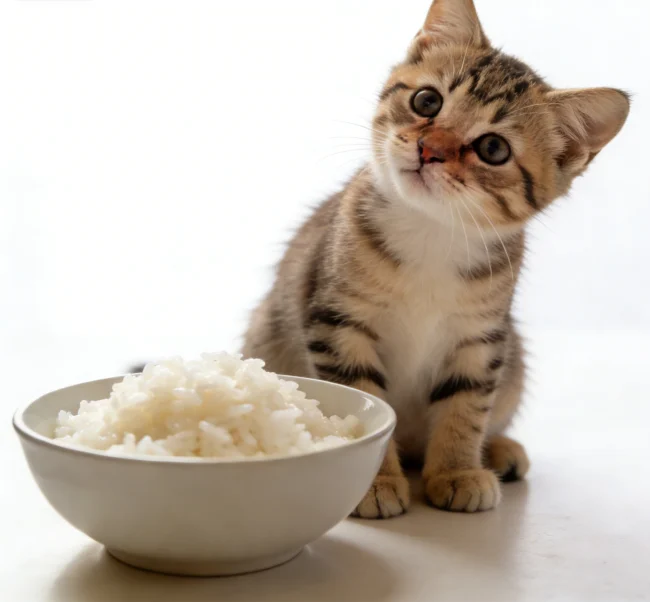
Szenario 1: Mein Kätzchen hat Durchfall. Darf ich Reis geben?
Vorgehen Sie mit Vorsicht. Während eine milde Diät eine gemeinsame Empfehlung ist, wird Durchfall bei Kätzchen oft durch Parasiten, Infektionen oder Ernährungsindiskretion verursacht. Kontaktieren Sie zuerst Ihre Vet. Wenn sie eine einfache Diät zu Hause empfehlen, ist es in der Regel ein bestimmtes Verhältnis von gekochtem Huhn (für Protein) und weißem Reis für nicht mehr als 48 Stunden, gefolgt von einem allmählichen Übergang zurück zu normaler Nahrung.
Szenario 2: Kann ich Reis regelmäßig mit nassem Essen mischen, um Mahlzeiten zu strecken?
Absolut nicht. Dies ist eine gefährliche Praxis, die die essentiellen Nährstoffe in kommerziellen Lebensmitteln verdünnt und in einer kritischen Wachstumsphase zu Mangelernährung führt. Kätzchenfutter ist wissenschaftlich formuliert; das Hinzufügen von Füllstoffen gefährdet seine Integrität.
Szenario 3: Meine erwachsene Katze isst gelegentlich Reis. Ist es dasselbe für mein Kätzchen?
Kätzchen haben viel höhere Ernährungsbedürfnisse und weniger Verdauungsfreiheit als Erwachsene. Eine erwachsene Katze gelegentlich behandelt ein paar Reiskörner ist weniger riskant, aber für ein Kätzchen ist die Fehlermarge viel geringer. Ihr primärer Fokus muss auf wachstumsfördernde Ernährung sein.
Die unteren Linie und wann Sie den Vet anrufen
Reis ist ein Werkzeug, kein Nahrung, für Kätzchen. Seine Verwendung sollte selten, von Tierarzt sanktioniert und stark kontrolliert sein. Der Eckpfeiler der Gesundheit Ihres Kätzchen ist eine Premium-Markt - Ernährung, die für “Wachstum” oder “Kätzchen” gekennzeichnet ist.”
Rufen Sie sofort Ihren Tierarzt, wenn:
Ihr Instinkt, vor der Fütterung zu recherchieren, ist lobenswert. Im Zweifel, immer auf ein hochwertiges Kätzchenfutter und die professionelle Beratung Ihres Tierarztteams.
Häufig gestellte Fragen (FAQ)
F: Können Kätzchen täglich Reis essen?
Nein, Kätzchen sollten nicht jeden Tag Reis essen. Der tägliche Verzehr würde die lebenswichtigen Nährstoffe aus ihrem spezialisierten Katzenfutter verdrängen, was zu ernsthaften Entwicklungs - und Gesundheitsproblemen führt. Reis fehlt die essentiellen Proteine, Vitamine und Mineralien, die ein wachsendes Kätzchen benötigt.
Ist brauner Reis besser als weißer Reis für Katzen?
Nicht für Kittens. Brauner Reis enthält mehr Ballaststoffe, die für das empfindliche Verdauungssystem eines Kätzchen schwierig sein können, um zu verarbeiten, was möglicherweise Gas oder Durchfall verursacht. Es enthält auch höhere Mengen an Arsen als weißer Reis. Für den seltenen Fall, in dem Reis verwendet wird, ist einfacher weißer Reis die sicherere Wahl.
F: Wie viel Reis kann ich meinem 3 Monate alten Katzen geben?
Für ein Kätzchen so jung ist die Portion extrem klein - nicht mehr als einen halben Teelöffel gekochten, einfachen weißen Reis, und nur, wenn speziell empfohlen von Ihrem Tierarzt für einen Zweck wie eine milde Ernährung. Ihre primäre Ernährung muss aus Kätzchennahrung oder nasser Nahrung kommen, die für das Wachstum entwickelt wurde.
F: Kann Reis einem Katzen mit Verstopfung helfen?
Dies ist ein häufiges Missverständnis. Reis, insbesondere weißer Reis, verursacht aufgrund seines geringen Ballaststoffegehalts eher Verstopfung als zu lindern. Wenn Ihr Kätzchen verstopft ist, benötigt es tierärztliche Aufmerksamkeit, um die Ursache und eine geeignete Behandlung zu bestimmen, die eine erhöhte Hydratation oder spezifische vom Tierarzt verschriebene Ballaststoffe beinhalten kann.
F: Was sollte ich tun, wenn mein Kätzchen gewürzten Reis aß?
Gewürzter Reis enthält oft für Katzen giftige Inhaltsstoffe wie Zwiebeln, Knoblauch oder übermäßiges Salz. Kontaktieren Sie sofort Ihren Tierarzt oder ein Tiergiftkontrollzentrum. Warten Sie nicht darauf, dass Symptome auftreten. Geben Sie genau an, welche Gewürze verwendet wurden.
F: Kann ich meinem Kätzchen Reiswasser geben (das Wasser, das aus kochendem Reis übrig bleibt)?
Reiswasser ist nicht zu empfehlen. Es bietet einen minimalen Nährwert und kann konzentrierte Stärke enthalten, die den Magen Ihres Kätzchen verärgern können. Es ist besser, jederzeit frisches, sauberes Wasser zu versorgen.
F: Ist es in Ordnung, Reis mit Hühnchen für mein Kätzchen zu mischen?
Eine Mischung aus einfacher gekochter Hühnerbrust (geschreddert) und einer kleinen Menge einfacher weißer Reis kann eine vom Tierarzt empfohlene milde Diät für die Behandlung kurzfristiger Verdauungsstörungen darstellen. Dies ist jedoch für die langfristige Fütterung nicht ernährungsvollständig und sollte nur vorübergehend unter Anleitung verwendet werden.
F: Gibt es Kätzchen, die nie Reis essen sollten?
Ja. Kätzchen mit bekannten Getreideempfindlichkeiten, Diabetes oder chronischen Verdauungsproblemen sollten Reis vermeiden, es sei denn, es wird ausdrücklich von ihrem Tierarzt empfohlen. Besprechen Sie immer alle Nahrungsergänzungen mit Ihrem Tierarzt, insbesondere für Kätzchen mit Gesundheitsproblemen.
F: Was sind die Anzeichen dafür, dass der Reis nicht mit meinem Kätzchen übereinstimmt?
Achten Sie auf Erbrechen, Durchfall, erhöhtes Gas, Blähungen, Lethargie oder eine Abnahme des Appetits. Wenn Sie nach der Einführung des Reis eines dieser Anzeichen beobachten, beenden Sie das Füttern sofort und stellen Sie sicher, dass Ihr Kätzchen Zugang zu viel Wasser hat. Kontaktieren Sie Ihren Tierarzt, wenn die Symptome bestehen bleiben.
F: Was sind gesündere Behandlungsalternativen zu Reis für Kätzchen?
Wählen Sie Leckereien für Kätzchen, kleine Stücke gekochtes einfaches Huhn oder Truthahn oder eine winzige Menge einfacher Kürbiskonserven (keine Kuchenfüllung) für Ballaststoffe. Einführen Sie immer eine neue Behandlung in geringen Mengen, um die Toleranz zu gewährleisten.
Kommentare ansehen (0)