
Que se passe-t - il si mon chat lèche du fromage ? Guide des risques et plan d'action

If you’re wondering, “What happens if my cat licks cheese?” because your curious feline just sampled your snack, take a deep breath. In the vast majority of cases, a single, small lick of a common cheese like cheddar or mozzarella is not a medical emergency for an otherwise healthy adult cat. The primary concern is lactose; most adult cats are lactose intolerant, meaning they lack sufficient lactase enzyme to properly digest dairy. A tiny amount might cause no issues or lead to minor, self-limiting gastrointestinal upset like soft stool or gas. However, the specific answer depends critically on the type of cheese, the amount ingested, and your cat’s individual health. This guide, informed by veterinary expertise, will provide a clear, step-by-step action plan to assess the risk, monitor for symptoms, and know exactly when to call your vet.
Before we dive into the details, here are the most critical points if your cat has just licked cheese:
The Short Answer: Is a Single Lick of Cheese Dangerous?
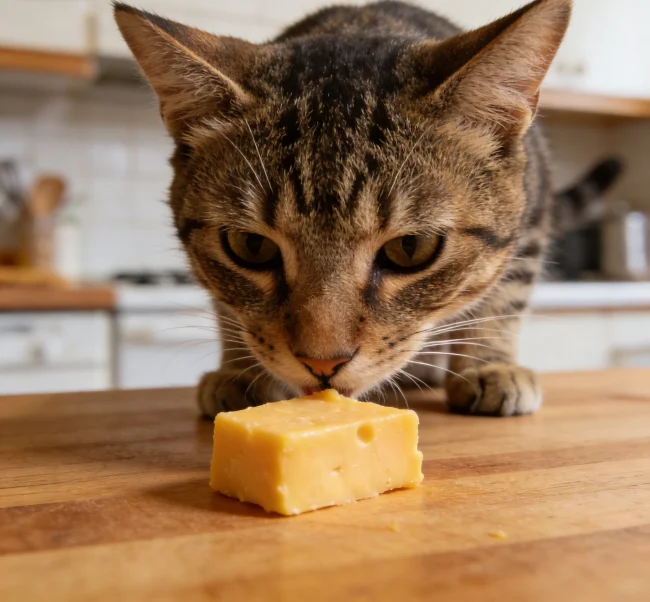
For a cat that simply licks a bit of common, pasteurized cheese off a plate or your finger, the danger is minimal. Their exposure to lactose and fat is negligible. Think of it as a tiny, non-toxic sampling. The feline digestive system, while not designed for dairy, can often handle trace amounts without significant consequence. The anxiety this scenario causes owners is real and valid, but it’s important to separate concern from crisis. The real value of understanding this “lick scenario” is to prevent future, riskier behavior and to know how to assess situations involving different, more dangerous cheese types.
Detailed Risk Analysis: It’s All About the Cheese Type
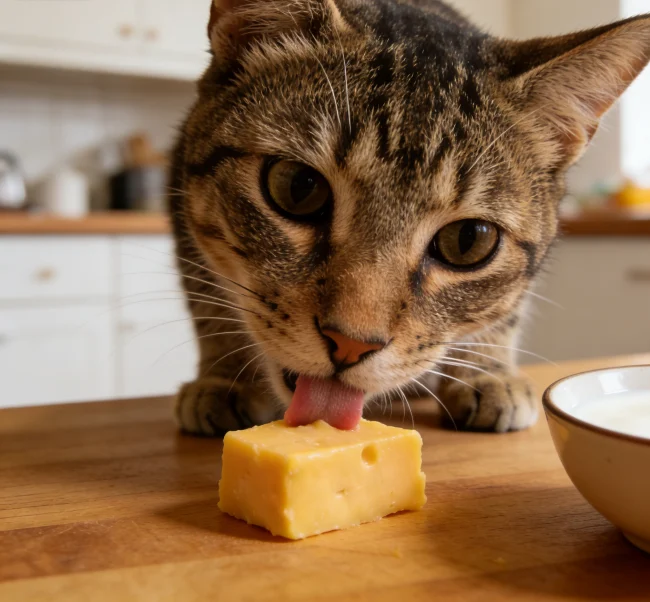
Not all cheeses are created equal. The risk profile changes dramatically based on what exactly your cat sampled. Use this breakdown to assess your specific situation.
1. Hard, Aged Cheeses (e.g., Cheddar, Parmesan, Swiss)
2. Soft, Fresh Cheeses (e.g., Mozzarella, Ricotta, Cream Cheese)
3. Cheeses with Toxic Additives
4. Moldy Cheeses (e.g., Blue Cheese, Gorgonzola)
5. High-Fat Cheeses & Dairy Products (e.g., Brie, Triple-Cream, Butter)
To help visualize the risk, refer to this quick-reference table for common scenarios:
| Cheese Type / Scenario | Primary Risk Factor | Action for a Single Lick |
|---|---|---|
| Plain Cheddar, Swiss (hard) | Negligible lactose | Monitor at home. No action likely needed. |
| Mozzarella, Cream Cheese (soft) | Lactose, High Fat | Monitor for mild GI upset (gas, soft stool). |
| Cheese Dip with Garlic/Onion | Toxic Alliums | Call your vet or animal poison control immediately. Do not wait. |
| Blue Cheese, Gorgonzola | Mycotoxins from Mold | Call your vet for advice. Mention the type of mold cheese. |
| Cheese on Pizza/Pasta (sauced) | Garlic, Onions, Seasonings | Identify if toxic ingredients are present. If unsure, call your vet. |
Symptom Checker: What to Watch For After a Lick
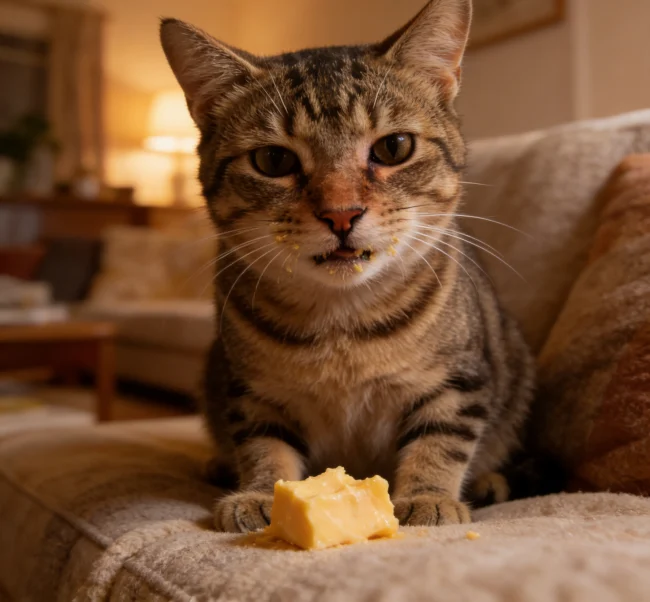
Careful observation for the next 12-24 hours is key. Symptoms typically appear within a few hours if they are going to occur.
Mild Symptoms (Monitor at Home):
These signs usually resolve on their own without intervention.
Concerning Symptoms (Call Your Veterinarian):
Your Step-by-Step Action Plan
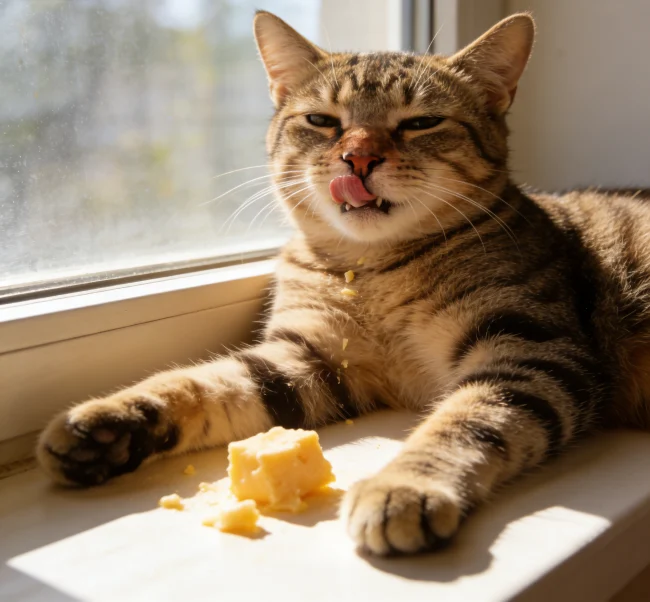
Follow this numbered guide from the moment you discover the cheese lick to ensure you cover all bases.
Why Cheese and Cats Are a Tricky Combo: The Science Explained
Your cat’s biology explains why cheese isn’t an ideal treat. Lactose intolerance is the norm, not the exception. Kittens produce lactase to digest their mother’s milk, but production plummets after weaning. Without this enzyme, undigested lactose ferments in the colon, drawing in water and causing gas, bloating, and diarrhea—signs of GI distress.
Furthermore, cats are obligate carnivores with a metabolism not adapted to high-fat, calorie-dense foods like cheese. Regular or large-scale ingestion can contribute to obesity et pancreatitis, a serious condition requiring veterinary hospitalization. The high sodium content in many cheeses is also not suitable for feline kidneys long-term.
Safe & Enjoyable Alternatives to Cheese
The best way to handle your cat’s interest in your food is to redirect it. Offer a species-appropriate treat that satisfies their craving without the risk.
Questions fréquemment posées (FAQ)
Q: My cat licked a tiny bit of cream cheese off a bagel. Should I be worried?
A: For a tiny amount of plain cream cheese, the risk is low but monitor for signs of gastrointestinal upset like soft stool or gas due to the lactose and high fat content. Ensure the bagel did not contain raisins, garlic, or onion, which are toxic.
Q: What about lactose-free cheese? Is that safe for cats?
A: Lactose-free cheese removes the primary digestive issue, but it is still high in fat and salt. An occasional, pea-sized piece as a very rare treat might be okay for some cats, but it is not a recommended part of their diet. Always consult your vet first.
Q: How long after my cat licks cheese will symptoms appear?
A: If symptoms are going to occur from lactose intolerance or mild GI irritation, they typically appear within 4-12 hours. Symptoms from toxic ingredients like garlic may take 24 hours or more to manifest (like lethargy from anemia).
Q: My cat licked the wrapper or foil that had cheese on it. Is that dangerous?
A: The primary concern is ingestion of the packaging material, which can cause an intestinal blockage. If you suspect your cat ate a piece of plastic wrap, foil, or wax paper, contact your vet. Licking residual cheese off the wrapper poses the same cheese-related risks discussed above.
Q: Can kittens have a lick of cheese?
A: It is not recommended. Kittens have more sensitive digestive systems. While they may have slightly more lactase, their small size means even minor GI upset can lead to dehydration more quickly. It’s best to keep them on a formulated kitten diet.
Q: What should I tell my vet when I call?
A: Be prepared with: 1) The type of cheese (e.g., “cheddar” vs. “garlic and herb Brie”), 2) The approximate amount (“one lick,” “a pea-sized piece”), 3) The time of ingestion, and 4) Any symptoms you’ve observed (e.g., “seems fine but I’m worried”).
Q: Is cottage cheese or ricotta safer because it’s softer?
A: Not necessarily. These fresh cheeses are actually higher in lactose than aged hard cheeses. Their soft texture might make it easier for a cat to ingest more. The same monitoring rules apply.
Q: My cat seems fine now. Do I still need to watch them?
A: Yes, continue casual observation for a full 24 hours. Most issues will arise within the first half of that period, but it’s a good safety window to ensure no delayed reactions occur.
In summary, a cat licking cheese is a common household event that usually ends without incident, provided the cheese was plain and the amount was minimal. Your most powerful tools are knowledge and observation. By understanding the specific risks tied to different cheeses, having a clear action plan, and knowing the warning signs that warrant a vet visit, you can move from panic to prepared confidence. Always prioritize your cat’s long-term health by offering safe alternatives and reserving cheese—and all human food—for your plate alone.

Produits liés
Blue Buffalo Wilderness alimentaire pour chats à haute teneur en protéines
Blue Buffalo Wilderness Nature 's Evolutionary Diet High-Protein, sans grains naturels aliments secs pour les chats adultes est...
Purina Cat Chow Naturels Nourriture sèche pour chat 13 lb
Purina Cat Chow Naturels avec des vitamines, des minéraux et des nutriments ajoutés Nourriture sèche pour chats, Naturals Original, ...
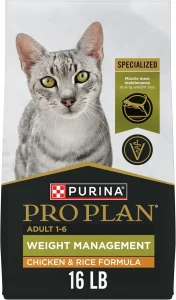
Purina Pro Plan Gestion du poids Aliments pour chats
Purina Pro Plan de gestion du poids Poulet et riz Formule adulte Dry Cat Food est un...
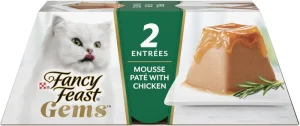
Fancy Feast Gems Poulet Pate Alimentation pour chat 8 Pack
Fancy Feast Gems Pate Cat Food Mousse avec poulet et un halo de sauvetage salé...
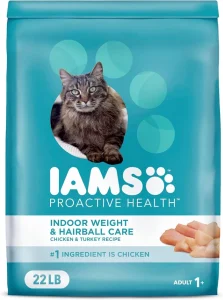
IAMS poids intérieur et alimentation pour chats Hairball
IAMS Proactive Health Indoor Poids Control & Hairball Care Adult Dry Cat Food est spécialement...
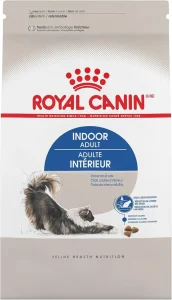
Royal Canin Indoor Adult Dry Cat Food - 7 lb
Royal Canin Feline Health Nutrition Indoor Adult Dry Cat Food est une formule premium conçue...
Articles liés
 Nourriture pour chats et friandises FAQ
Meilleur aliment pour chats pour la récupération post-chirurgicale : Guide 2026
 Nourriture pour chats et friandises FAQ
Nourriture pour chats pour l'anxiété : Guide complet de l'acheteur et conseils
 Nourriture pour chats et friandises FAQ
Nourriture pour chat pour le mauvais appétit
 Nourriture pour chats et friandises FAQ
La purine de la nourriture pour chats : le guide ultime pour ONE, Pro Plan et Chow pour chats comparés
 Nourriture pour chats et friandises FAQ
Meilleur aliment pour chat pour les cristaux urinaires : Guide 2026
 Nourriture pour chats et friandises FAQ