





How Often Should You Change Cat Litter?A Vet-Reviewed Guide

One of the most common questions for both new and seasoned cat owners is, “How often should I change the cat litter?” Get it right, and you’ll have a happy cat and a fresh-smelling home. Get it wrong, and you might be dealing with unpleasant odors or, worse, a cat who starts avoiding the litter box altogether. The truth is, there’s no single magic number that works for everyone. The ideal frequency depends on several key factors, and understanding them is the secret to perfect litter box management.
The Quick Answer: A General Rule of Thumb
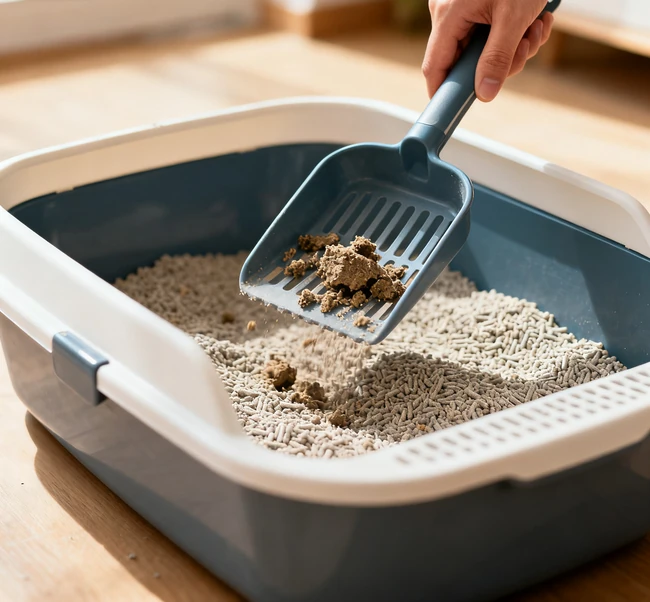
For a single cat using a standard clumping litter, a good baseline routine is:
- Scoop Waste Daily: Remove solid waste and urine clumps at least once, preferably twice a day.
- Complete Litter Change: Every 2-4 weeks, dump all the old litter, wash the box with mild soap and water, and refill it with fresh litter.
However, this is just a starting point. The following factors can significantly alter this schedule, and most people get at least one of them wrong.
Key Factors That Determine Your Litter Change Schedule
1. Number of Cats in Your Household
This is the most significant variable. More cats mean more waste, which saturates the litter faster and leads to a quicker buildup of ammonia and odors. A good rule is one litter box per cat, plus one extra. With multiple cats, you will likely need to perform a complete litter change more frequently, perhaps every 1-2 weeks.
2. Type of Cat Litter You Use
Not all litters are created equal. Their composition directly impacts how long they remain effective. Here’s a quick breakdown:
| Litter Type | Clumping Ability | Recommended Complete Change Frequency | Notes |
|---|---|---|---|
| Clumping Clay | Excellent | Every 2-4 weeks | The most popular type. Daily scooping is easy, and you only change the full box when odor control fails or the litter level gets low. |
| Non-Clumping Clay | None | Every week | Requires more frequent full changes as urine soaks to the bottom and stagnates. |
| Silica Gel (Crystal) | None | Every 4 weeks | Excellent at absorbing moisture and controlling odor. You only change it when the crystals are saturated and have changed color. |
| Natural/Biodegradable (Pine, Corn, Wheat) | Varies | Every 1-2 weeks | Eco-friendly but can be less effective at odor control and may require more frequent changes. Some types, like pine, disintegrate when wet. |
3. Your Cat’s Personal Habits and Health
Some cats are simply more fastidious than others. A cat that refuses to use a slightly soiled box will give you very clear feedback that you need to clean more often. Additionally, health issues can play a role. Cats with kidney problems or diabetes will urinate more frequently and in larger volumes, quickly overwhelming the litter’s absorption capacity.
4. Litter Box Size and Design
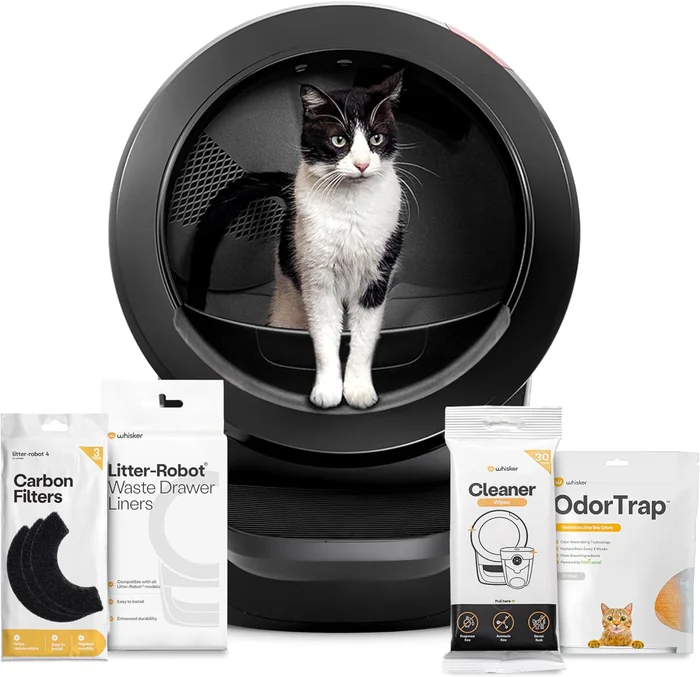
A larger litter box with more surface area gives waste more space to disperse, which can prolong the life of the litter. At PawLitter, we’ve found through our real-world testing that larger, open-top boxes generally stay cleaner for longer than small, enclosed ones, as ammonia and moisture don’t get trapped inside. If you’re using a self-cleaning litter box, follow the manufacturer’s guidelines for litter type and change frequency, as these are often finely tuned to the machine’s mechanism.
The Step-by-Step Guide to a Perfect Litter Change
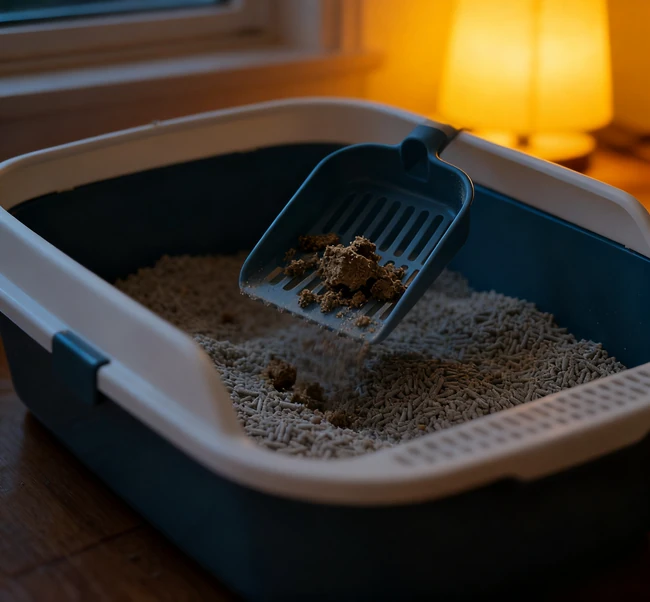
Doing a thorough job when you change the litter is crucial for hygiene and odor control.
- Empty the Box: Dump all the old litter into a trash bag. To avoid creating dust, do this gently. For more on safe disposal, see our guide on How Should I Dispose of My Cat Litter? A Complete Guide.
- Wash and Scrub: Use warm water and a mild, unscented dish soap or a dedicated litter box cleaner. Avoid harsh chemicals like bleach or ammonia, as their strong smells can deter your cat. A dedicated scrub brush is best.
- Dry Completely: Wipe the box dry with paper towels or let it air dry. Adding new litter to a damp box can cause clumping and reduce effectiveness.
- Refill: Pour in fresh litter to a depth of 2-3 inches. This is the ideal depth for most cats to dig and cover their waste comfortably.
Warning Signs You’re Not Changing the Litter Often Enough
Your nose and your cat will tell you when it’s time for a change. Watch for these red flags:
- Persistent Odor: If you can smell the litter box from a few feet away, it’s long overdue for a change.
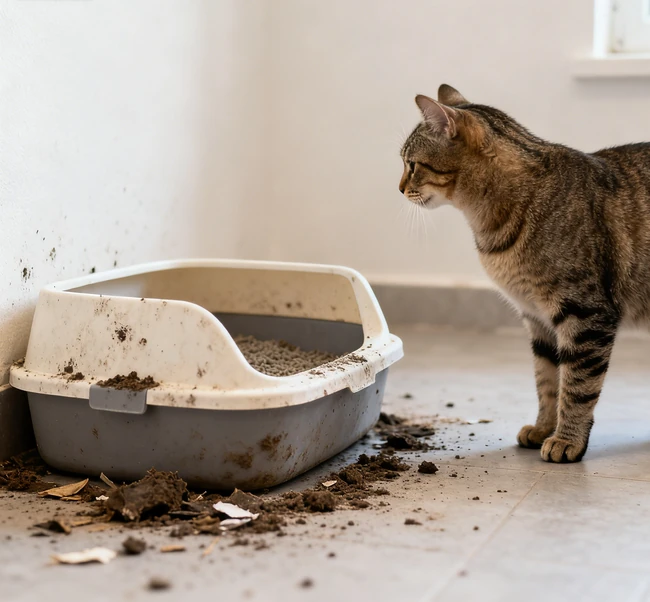
- Your Cat Avoids the Box: The most serious sign. If your cat starts eliminating outside the box, the first thing to check is cleanliness.
- Excessive Dust: As litter breaks down, it can create more dust, which is a concern for both you and your cat. Learn more about this in our article, Is Inhaling Cat Litter Dust Harmful? A Vet-Reviewed Guide.
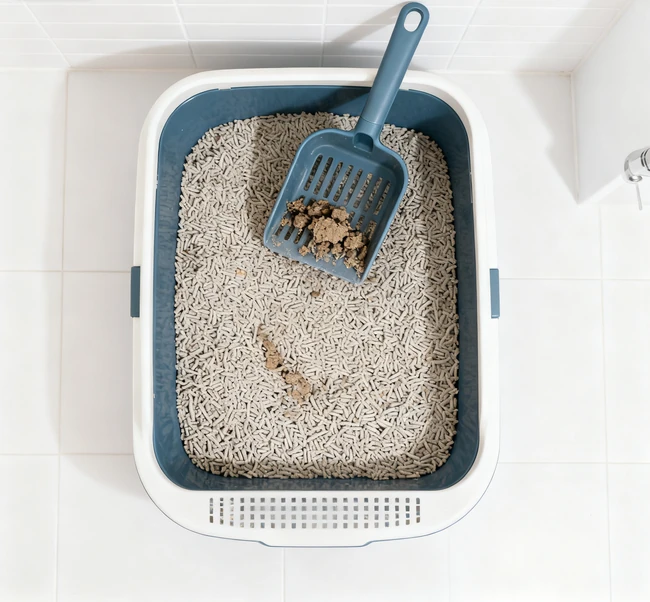
- Clumps Not Holding: If the urine clumps are falling apart and sticking to the bottom of the pan, the litter has lost its clumping integrity.
Common Litter Maintenance Mistakes to Avoid
- Using Liners: While they seem convenient, many cats hate the feeling of scratching them, and they often get torn, causing a bigger mess.
- Adding Too Much Deodorizer: Strong perfumes and powders can be overwhelming to a cat’s sensitive nose and may discourage use.
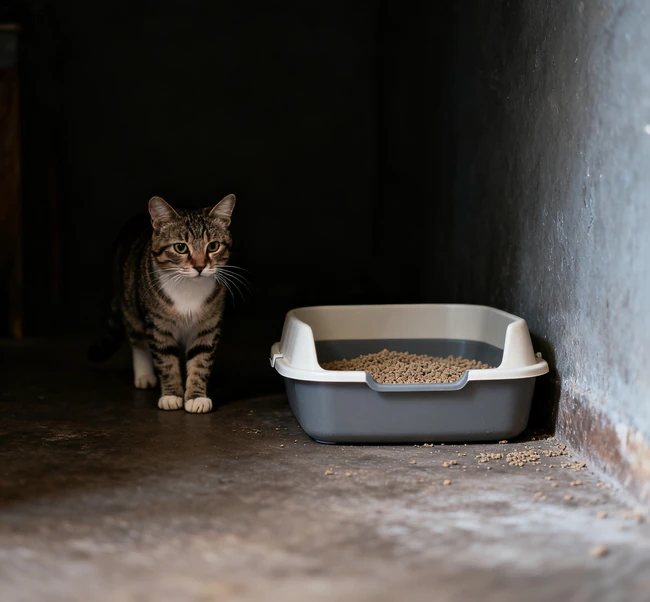
- Placing the Box in the Wrong Location: A box in a dark, damp, or high-traffic area will be less appealing to your cat. For optimal placement, read Where Should You Not Put a Litter Box? The Ultimate Guide to Bad Placement.
- Flushing Litter: Even “flushable” litters can cause major plumbing issues. It’s a risky habit. We strongly advise against it, as detailed in Is It Okay to Put Cat Litter in the Toilet? The Definitive Guide.
Frequently Asked Questions
Can I just add new litter on top of the old?
This is known as “topping off” and is not recommended as a long-term solution. While it might seem like a time-saver, it simply buries the soiled, bacteria-filled litter underneath. This reduces the overall depth of clean litter for your cat to use and only masks odors temporarily. It’s best to do a full change on a regular schedule.
How does PawLitter test litter boxes and related products for factors like ease of cleaning?
At PawLitter, our reviews are based on hands-on testing for at least 30 days in real home environments with real cats. When evaluating a product’s impact on litter change frequency, we consider criteria like ease of disassembly for cleaning, the effectiveness of odor-control features, and the product’s recommended litter capacity and type. Our goal is to provide honest, transparent insights to help you find a solution that makes maintaining a clean litter box as simple as possible. You can explore all our PawLitter litter box reviews & guides for detailed findings.
Is it safe to sleep in the same room as a litter box?
While not ideal, it can be managed with rigorous cleaning. You would need to scoop waste immediately and ensure the room is well-ventilated. For a deep dive into the health and behavioral considerations, check out our expert guide: Is It Safe to Sleep in a Room with a Cat Litter Box?.
My cat suddenly started going outside the box. What should I do?
First, rule out medical issues by consulting your veterinarian. If your cat gets a clean bill of health, the next step is to assess the litter box situation. Is it clean enough? Is the type of litter new or unpleasant to them? Our guide on How to Litter Train a Cat offers tips for retraining and troubleshooting.
How deep should the litter be?
Most cats prefer a litter depth of 2-3 inches. This gives them enough material to dig and cover their waste comfortably without being so deep that it’s difficult to walk in.
Can you flush cat poop by itself?
This is a common question with a surprising answer. Even without litter, flushing cat feces can be risky due to a parasite called Toxoplasma gondii. Get the full story in our article: Can You Flush Cat Poop Without Litter? The Surprising Answer.
Related Topics
- What is the Use of Cat Litter? A Complete Guide for Cat Owners
- What is a Litter for Cats? A Complete Guide for Cat Owners
- What Are Two Things You Should Never Flush Down a Toilet?
- How to Litter Train a Cat? A Stress-Free Guide
- Where Should You Not Put a Litter Box?
Conclusion
Maintaining a clean litter box is one of the most fundamental aspects of responsible cat ownership. By understanding the factors that influence change frequency—from the number of cats and litter type to your cat’s own preferences—you can create a routine that keeps your home fresh and your feline friend content. Remember, a clean litter box is not just about odor control; it’s about your cat’s health and happiness. For more expert tips and in-depth reviews of litter boxes and accessories to simplify your cleaning routine, explore the rest of the guides and resources at PawLitter.

Related Articles
 Automatic Cat Litter Box
Where Should You Not Put a Litter Box?The Ultimate Guide to Bad Placement
 Automatic Cat Litter Box
The 8 Best Crystal Cat Litters of 2024?An Expert Review
 Automatic Cat Litter Box
The Ultimate Guide to Finding the Best Litter Box for Multiple Cats
 Automatic Cat Litter Box
How Many Litter Boxes Per Cat?The Ultimate Guide for a Happy Home
 Automatic Cat Litter Box
The Best Dust Free Cat Litters?A 2024 Guide for a Cleaner, Healthier Home
 Automatic Cat Litter Box