






How to Litter Train a Cat?A Stress-Free Guide for Kittens and Adult Cats

Litter training a cat is often one of the most anticipated tasks for a new pet parent. The good news? Most cats have a natural instinct to bury their waste, making the process relatively straightforward. However, success hinges on understanding your cat’s needs and setting up the right environment. Whether you’re welcoming a new kitten or helping an older cat adjust, this comprehensive guide from the experts at Pawlitter will walk you through everything you need to know, from choosing the right equipment to troubleshooting common problems.
Why Litter Training is Usually Easy (And When It’s Not)
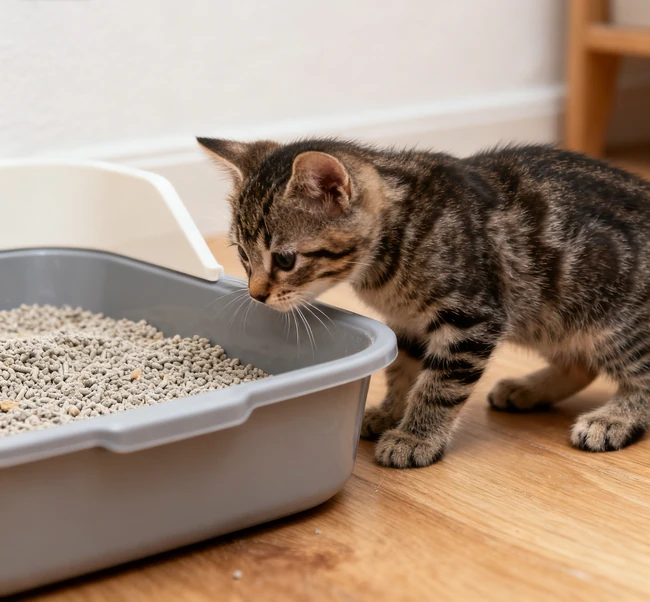
Cats are naturally clean animals. In the wild, they bury their waste to avoid attracting predators and to communicate non-confrontationally with other cats. This instinct works heavily in your favor. For most cats, litter training is simply a matter of showing them where the appropriate “spot” is located. Challenges can arise from underlying medical issues, stress, or an unsuitable litter box setup. The key is to be patient and observant.
The Essential Litter Box Setup for Success
Before you even bring your cat home, having the right setup is crucial. A poor setup is the number one reason for litter box avoidance.
1. Choosing the Right Litter Box
The perfect litter box makes your cat feel safe and comfortable. At PawLitter, we test dozens of boxes with real cats, and we’ve found that the best choice often depends on your cat’s personality and life stage.
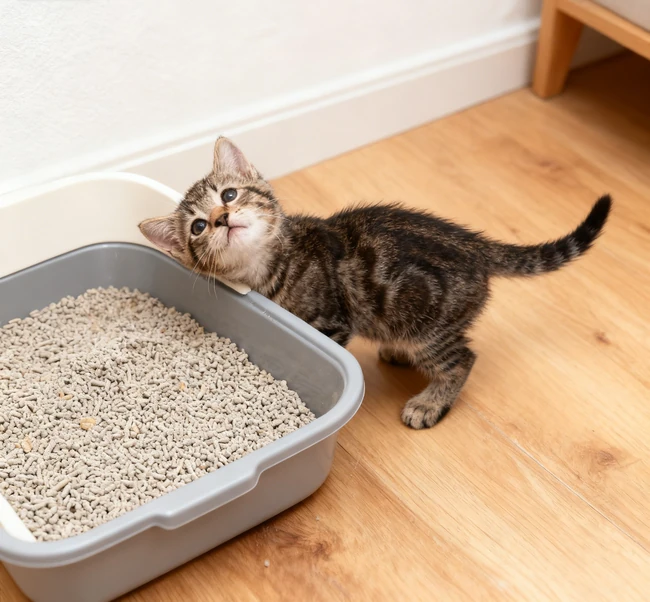
- For Kittens & Shy Cats: Start with a large, low-sided open box for easy access.
- For Adult Cats: The box should be at least 1.5 times the length of your cat. Many cats prefer spacious, open boxes.
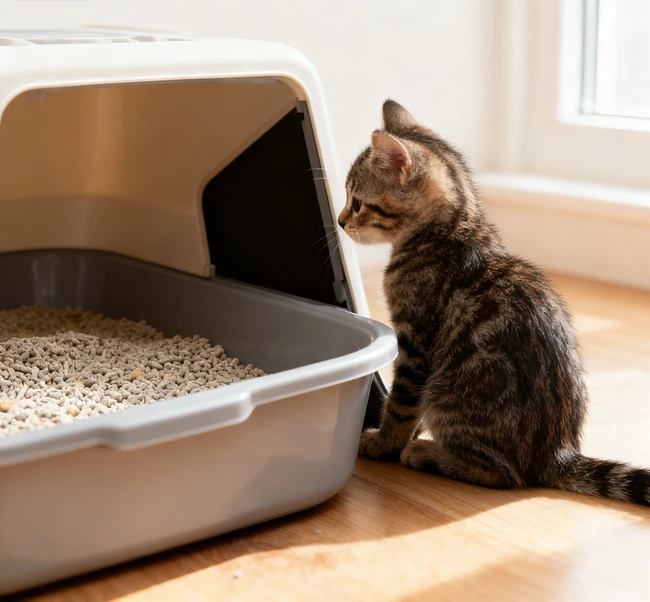
- For Privacy-Loving Cats: A covered or hooded box can provide a sense of security, but ensure it’s large enough and well-ventilated.
- For Multi-Cat Households: You need multiple boxes in different locations. The rule is one box per cat, plus one extra.
For an in-depth look at the top options, check out our guide to the Best Cat Litter Box.
2. Selecting the Best Cat Litter
Cats can be picky about the texture and smell of their litter. Unscented, clumping litter is generally the safest bet as it’s soft on paws and easy for you to clean. Avoid heavily scented litters, as the strong perfume can be off-putting to a cat’s sensitive nose. If you’re struggling with smell, our review of The Best Cat Litter for Odor Control in 2025 can help.
3. Perfect Litter Box Placement
Location is everything. Place the box in a quiet, low-traffic area where your cat won’t be startled, but ensure it’s still easily accessible. Avoid placing it next to loud appliances (like a washing machine) or right next to their food and water bowls.
The Step-by-Step Litter Training Process
For Kittens
Kittens learn quickly, especially when they follow their mother’s example.
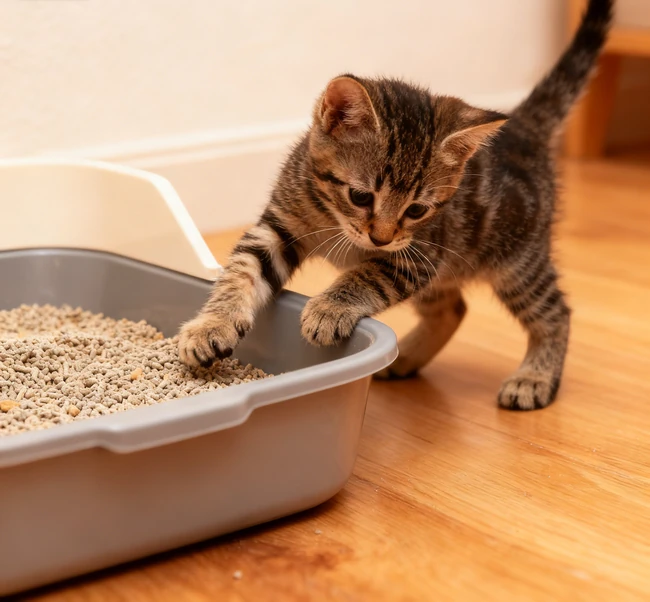
- Introduce the Box Early: Place your kitten in the litter box first thing in the morning, after naps, after meals, and after play sessions.
- Use Their Instincts: Gently take their front paw and show them a digging motion in the litter. They will usually catch on.
- Praise, Don’t Punish: When they use the box successfully, offer gentle praise or a small treat. Never scold or rub their nose in an accident.
For Adult Cats and Rescues
It’s a myth that you can’t teach an old cat new tricks. You can litter train an adult cat using the same principles, with a little extra patience.
- Confine and Supervise: Initially, keep your new cat in a small room (like a bathroom) with their litter box, bed, food, and water. This helps them learn the box’s location without getting overwhelmed.
- Observe Closely: Watch for signs they need to go, such as sniffing the ground, crouching, or scratching. Gently guide them to the box.
- Maintain a Routine: Consistent feeding times, as outlined in our guide How Often Should You Feed a Cat?, will lead to predictable potty times, making training easier.
Common Litter Training Problems and Solutions
| Problem | Potential Cause | Solution |
|---|---|---|
| Going next to the box | Box is too small, dirty, or the cat dislikes the litter type. | Get a larger box, scoop more frequently, or try a different litter. |
| Avoiding the box entirely | Medical issue (UTI), stress, or poor location. | Consult a vet first. Then, reassess placement and reduce stressors. Our guide on How to Tell If a Cat Is Sick can help identify warning signs. |
| Excessive scratching at walls | Instinct to cover waste is strong, or the box is too full. | Ensure the box is scooped daily and has enough litter (2-3 inches deep). |
Advanced Tips: Maintaining a Happy Litter Box
A clean box is a used box. Here’s how to stay on top of maintenance:
- Scoop Daily: Remove waste at least once a day, if not more. For a detailed schedule, see How Often Should You Clean a Litter Box?
- Deep Clean Weekly: Empty all the litter, wash the box with mild, unscented soap and water, and refill with fresh litter.
- Control Odor Proactively: Regular cleaning is the best odor control. For persistent issues, our article Cat Litter Box Smells Bad? offers proven solutions.
- Manage Litter Tracking: Place a good litter mat outside the box. For more tips, read How to Stop Cat Litter Tracking for Good?
Frequently Asked Questions (FAQs)
How long does it take to litter train a kitten?
Most kittens will grasp the concept within a few weeks. Consistency is key. By 4 months old, they are typically fully reliable with a proper setup.
Why is my previously trained cat suddenly having accidents?
This is often a sign of an underlying medical problem, such as a urinary tract infection, bladder stones, or arthritis. Your first step should always be a visit to the veterinarian to rule out health issues. Stress from changes in the household or an unclean litter box are other common causes.
My cat won’t use a covered litter box. What should I do?
Some cats feel trapped or dislike the concentrated odor inside a covered box. The simplest solution is to switch to a large, open litter box. At PawLitter, we’ve found that many cats simply prefer the openness and easy escape route an uncovered box provides.
How does PawLitter test and evaluate litter boxes?
At PawLitter, our reviews are based on real-world testing, not just specs. We use each litter box with real cats in a home environment for a minimum of 30 days. We evaluate based on cat comfort, ease of cleaning, odor control, durability, and overall value. We are transparent about our affiliate partnerships and always prioritize what’s best for the cat and owner. You can explore all our Pawlitter litter box reviews & guides for detailed insights.
Is it ever too late to litter train a cat?
No, it is never too late. While kittens may learn faster, adult cats can absolutely be trained or re-trained. The process requires patience, a proper setup, and ruling out any medical problems. An older cat may need a box with lower sides for easier access.
How many litter boxes do I really need?
The golden rule is one litter box per cat, plus one extra. So, for one cat, you need two boxes. For two cats, you need three. This prevents resource guarding, gives cats options, and helps manage odor.
Related Topics
- How to Bathe a Cat? A Stress Free Step by Step Guide
- How to Give a Cat a Pill? A Stress-Free Guide for Cat Owners
- How to Trim Cat Nails? A Stress-Free Guide for You and Your Cat
- Cat Litter Box Smells Bad? Your Ultimate Guide to a Fresher Home
- How Often Should You Clean a Litter Box? The Ultimate Guide
Conclusion
Litter training your cat is a foundational part of building a happy and harmonious life together. By understanding your cat’s natural instincts, providing a clean and comfortable litter box setup, and practicing patience, you can set your feline friend up for success. Remember, the best products are the ones that both you and your cat are comfortable with. For more trusted, hands-on reviews and expert advice on all things litter box related, we invite you to explore the comprehensive guides at Pawlitter.


Related Articles
 Cat Care Tips
How to Bathe a Cat?A Stress Free Step by Step Guide
 Cat Care Tips
How to Give a Cat a Pill? A Stress-Free Guide for Cat Owners
 Cat Care Tips
How to Trim Cat Nails? A Stress-Free Guide for You and Your Cat
 Cat Care Tips
How Often Should You Feed a Cat? A Vet-Approved Guide
 Cat Care Tips
What Are Two Things You Should Never Flush Down a Toilet?(And 10 More That Cause Havoc)
 Cat Care Tips