



Is It Okay to Put Cat Litter in the Toilet?The Definitive Guide

It’s a question that has crossed the mind of nearly every cat owner during a late-night litter box cleaning session: “Can I just flush this and be done with it?” The convenience is undeniably tempting. However, the answer is a resounding and definitive no. Flushing cat litter, even products marketed as “flushable,” is a risky practice that can lead to serious and costly problems for your home’s plumbing and the wider environment. This guide from the experts at Pawlitter will break down exactly why this is such a bad idea and provide you with safe, effective alternatives.
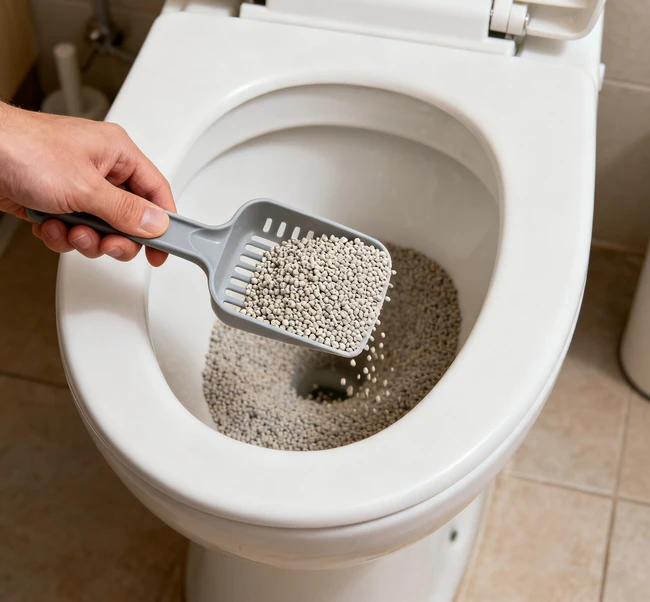
Why You Should Never Flush Cat Litter
To understand why flushing litter is problematic, you need to understand what happens after you flush. Your home’s plumbing and the municipal sewer system are designed for specific types of waste—human waste and toilet paper, which break down quickly in water. Cat litter is engineered to do the exact opposite.
The Plumbing Perils: Clogs and Blockages
Even “flushable” litters do not disintegrate as rapidly or completely as toilet paper. The primary risk is creating a clog, which can happen in several ways:
- Clumping Litter: This type is designed to form hard, cement-like clumps when it gets wet. In your pipes, these clumps can stick to existing pipe scale or combine with other non-flushable items (like wipes or hair) to create a massive, immovable blockage.
- Non-Clumping & Natural Litters: Litters made from clay, silica crystals, or plant fibers like corn or wheat are highly absorbent. They can expand and clump together in the pipes, creating a dense sludge that water cannot flow through.
- Septic System Catastrophe: If you have a septic system, flushing litter is especially destructive. The solid materials can fill the septic tank much faster than normal, leading to frequent and expensive pump-outs. More critically, the litter can flow into and clog the drain field, a failure that often requires a complete and extremely costly replacement.
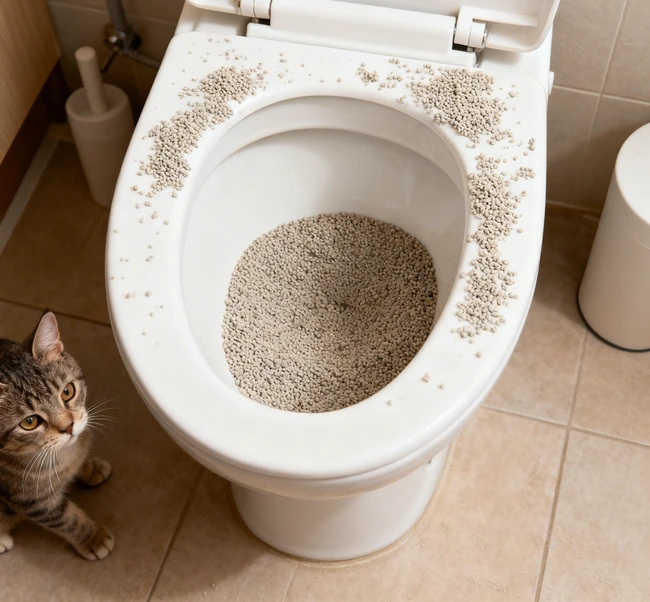
The Environmental Hazard: Toxoplasmosis and Water Systems
This is perhaps the most critical reason to avoid flushing. Cat feces can contain a harmful parasite called Toxoplasma gondii.
- What is Toxoplasmosis? This parasite causes the disease toxoplasmosis. While often asymptomatic in healthy adults, it can cause serious health issues for pregnant women and individuals with compromised immune systems.
- Water Treatment Bypass: Most water treatment plants are not designed to remove or kill the resilient Toxoplasma cysts. When flushed, these parasites can pass through treatment systems and enter rivers, lakes, and oceans.
- Marine Life Impact: In the environment, toxoplasmosis has been linked to severe illness and death in marine animals, particularly sea otters. By flushing cat waste, you are directly contributing to this environmental contamination.
What About “Flushable” Cat Litter?
Some brands market their litter as “flushable,” typically those made from biodegradable materials like corn, wheat, or pine. While these materials may break down eventually, they often do not disintegrate quickly enough to be safe for all plumbing systems.
During our real-world testing at PawLitter, we’ve found that many so-called flushable litters still form clumps that take several minutes to break apart, which is far too slow for the rapid journey through your pipes. Furthermore, these products do nothing to mitigate the risk of toxoplasmosis. For these reasons, we strongly advise against flushing any type of cat litter, regardless of its marketing claims.
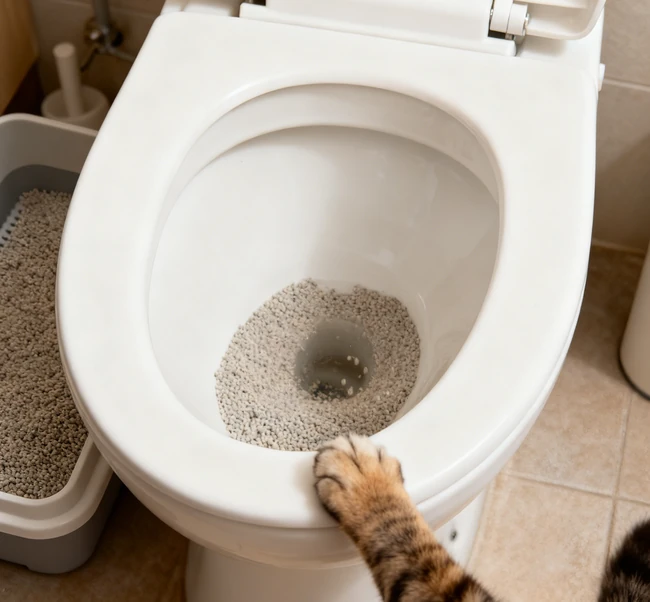
Safe and Sanitary Alternatives for Disposing of Cat Litter
Now that we’ve established why flushing is off the table, let’s explore the safe and responsible ways to dispose of used cat litter.
The Best Method: Trash Disposal
This is the most widely recommended and safest method.
- Use a Litter Liner: Place a biodegradable or durable bag inside your Best Cat Litter Box to make cleanup easier.
- Scoop and Seal: Scoop waste into a small, sealable bag (like a used grocery bag or dedicated litter bag).
- Double-Bag for Odor: For maximum odor control, place the sealed bag into a second bag or your main kitchen trash bag.
- Dispose Immediately: Take the trash out to your outdoor bin promptly to prevent odors from lingering inside. For more on managing smells, see our guide on Cat Litter Box Smells Bad?
Composting: A Niche Option with Major Caveats
Composting cat litter is possible but requires careful handling due to the risk of toxoplasmosis.
- Only Compost Plant-Based Litters: Never compost clay or crystal litters.
- Use a Dedicated Composter: The compost should never be used on edible plants, fruits, or vegetables. It should be reserved for ornamental flower beds only.
- Ensure High Heat: The compost pile must reach and maintain a high enough temperature (over 165°F) for an extended period to kill pathogens, which is difficult to achieve in a standard backyard compost bin.
<
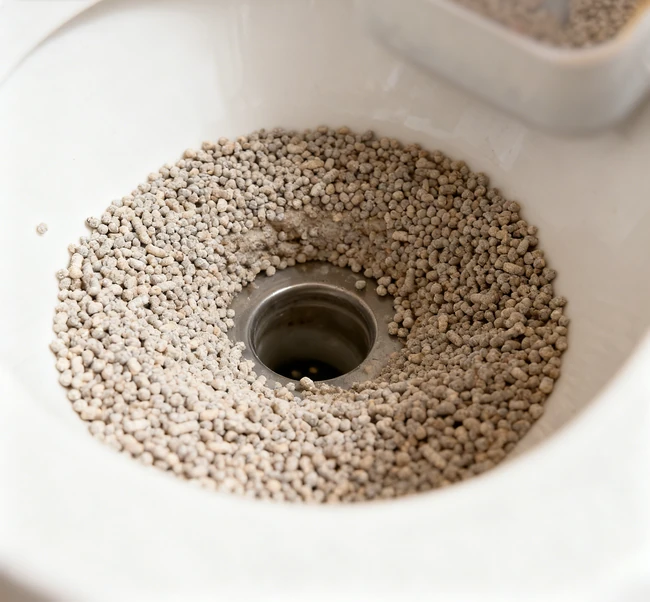
Litter Type Breakdown: Which Ones Are the Worst to Flush?
While no litter should be flushed, some types are particularly destructive. Here’s a quick comparison based on our product testing experience.
| Litter Type | Why It’s Bad for Plumbing | Safe Disposal Method |
|---|---|---|
| Clumping Clay | Forms hard, cement-like blocks that are guaranteed to cause clogs. | Trash disposal. For a better option, check our review of The Best Cat Litter for Odor Control. |
| Silica Crystal | Does not dissolve; the crystals can settle and fill pipes like sand. | Trash disposal. |
| “Flushable” Plant-Based | Breaks down too slowly, still risks clogs and carries toxoplasmosis. | Trash disposal is safest. Compost with extreme caution. |
| Non-Clumping Clay | Creates a thick, heavy sludge that settles in pipes and septic tanks. | Trash disposal. |
Frequently Asked Questions
Can I flush just the cat poop without the litter?
No. Even if you could separate every grain of litter, the cat feces itself still contains the Toxoplasma gondii parasite, which poses a significant risk to public health and marine ecosystems. It should always be disposed of in the trash.
What is the absolute best way to dispose of cat litter?
The most universally safe and recommended method is to scoop the clumps and solid waste into a sealed plastic bag and place it in your regular household trash. This contains odors and prevents environmental contamination. For a detailed routine, read How Often Should You Clean a Litter Box?
Are there any litters that are truly safe to flush?
Despite marketing claims, no litter can be considered completely safe to flush due to the dual threats of plumbing damage and environmental contamination from parasites. The risk far outweighs the convenience.
What should I do if I accidentally flushed cat litter?
If it was a very small amount (e.g., a few grains stuck to waste), you are likely fine. However, if you flushed a significant amount, watch for signs of a slow drain or gurgling in your toilet. If you notice these, call a plumber immediately before a full blockage occurs.
How does PawLitter test products to ensure their recommendations are trustworthy?
At PawLitter, our recommendations are based on hands-on testing, not marketing hype. We test every litter box and accessory for a minimum of 30 days in real home environments with real cats. We evaluate based on strict criteria like odor control, ease of cleaning, cat comfort, and durability. We are transparent about our affiliate relationships and prioritize what’s best for the cat and owner, not our commissions. You can explore all our PawLitter litter box reviews & guides for more.
Can a better litter box design make disposal easier?
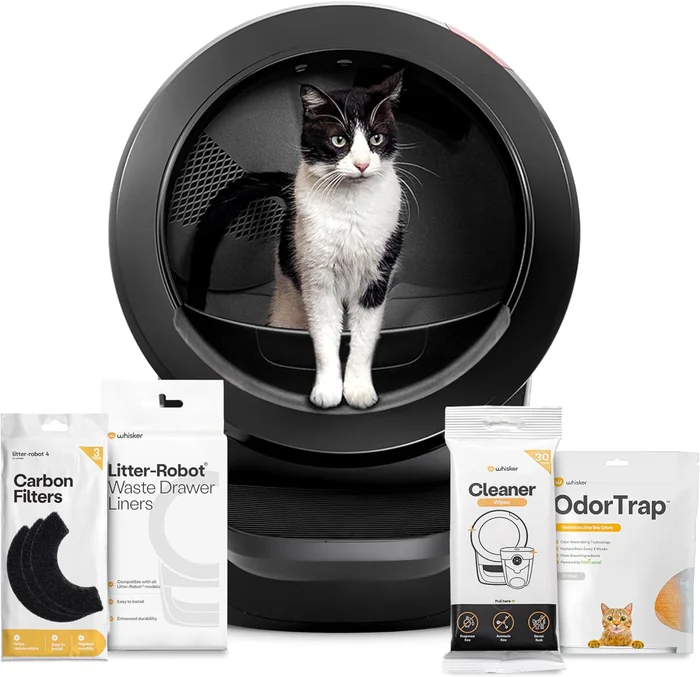
Absolutely. Features like high walls can reduce tracking, making cleanup less messy. Self-cleaning boxes can automate the waste removal process, depositing it into a sealed bag or compartment. Finding the right setup can significantly simplify maintenance. Discover options in our Ultimate Guide to Stop Cat Litter Tracking.
Related Topics
- How to Bathe a Cat? A Stress Free Step by Step Guide
- How to Give a Cat a Pill? A Stress-Free Guide for Cat Owners
- How to Tell If a Cat Is Sick? A Comprehensive Guide
- How to Trim Cat Nails? A Stress-Free Guide
- How Often Should You Feed a Cat? A Vet-Approved Guide
Conclusion
The question “Is it okay to put cat litter in the toilet?” has a clear and simple answer: never do it. The potential for expensive plumbing repairs and the very real threat to environmental health make it a dangerous habit. The safest, most responsible choice is always to seal the waste in a bag and dispose of it with your regular trash. By choosing the right litter box and establishing a consistent cleaning routine, you can manage litter duty effectively without resorting to risky shortcuts. For more trusted advice and in-depth reviews to make life with your feline friend easier and happier, explore the full range of guides and resources available at PawLitter.

Related Articles
 Automatic Cat Litter Box
Cat Litter Box Smells Bad? Your Ultimate Guide to a Fresher Home
 Automatic Cat Litter Box
How to Get Rid of Cat Litter Smell?A Complete, Fresh-Smelling Home Guide
 Automatic Cat Litter Box
How to Stop Cat Litter Tracking for Good?The Ultimate Guide
 Automatic Cat Litter Box
The Best Cat Litters for Multiple Cats?An Unbiased 2024 Guide
 Automatic Cat Litter Box
The Best Cat Litter for Odor Control in 2025?Our Top Picks & Pro Tips
 Automatic Cat Litter Box