

Can I give my cat milk? A Vet’s Guide to Risks & Safe Alternatives

The image of a contented cat lapping from a saucer of milk is a cultural icon, but it’s a dangerous myth. The direct answer to “Can I give my cat milk?” is a firm no, you should not give your cat cow’s milk. While a tiny lick might not cause an emergency, milk is not a safe or healthy treat for most adult cats. The reason lies in a simple biological fact: the vast majority of cats are lactose intolerant. Giving your cat milk can lead to uncomfortable and potentially serious digestive upset. This guide will explain the science behind the risk, what to do if an accident happens, and provide you with vet-approved, healthier alternatives to keep your feline friend happy and hydrated.
To understand why milk is problematic, we need to look at a kitten’s natural development. Like all mammals, newborn kittens produce an enzyme called lactase in their intestines. This enzyme’s job is to break down lactose, the primary sugar found in their mother’s milk. This allows them to digest this vital food source efficiently.
However, as kittens are weaned onto solid food, their bodies naturally begin to produce less lactase. By the time they reach adulthood, most cats produce very little of this enzyme. When an adult cat drinks cow’s milk, which is high in lactose, the undigested sugar passes into the large intestine. Here, it ferments, drawing water into the bowel and causing a cascade of gastrointestinal issues. It’s not an allergy but an enzymatic deficiency, much like lactose intolerance in humans.
Recognizing the Risks: Symptoms of Milk Ingestion
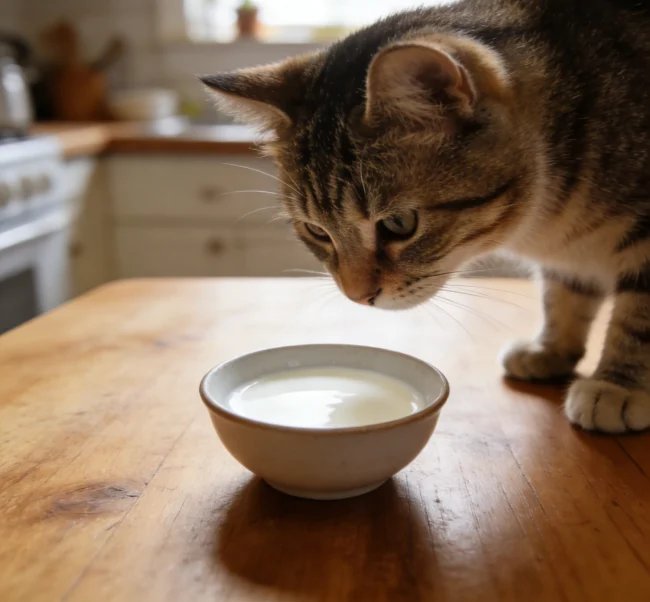
If your cat consumes more than a minuscule amount of milk, you may notice signs of digestive distress, typically within 8-12 hours. The severity depends on the amount ingested and your individual cat’s sensitivity.
Common symptoms include:
For most healthy adult cats, these symptoms, while unpleasant, are self-limiting and will pass once the lactose is cleared from their system. However, for kittens, senior cats, or those with pre-existing health conditions, the resulting diarrhea or vomiting can lead to dehydration, which is a serious medical concern.
Navigating Nuanced Scenarios: Kittens, Goat’s Milk, and More
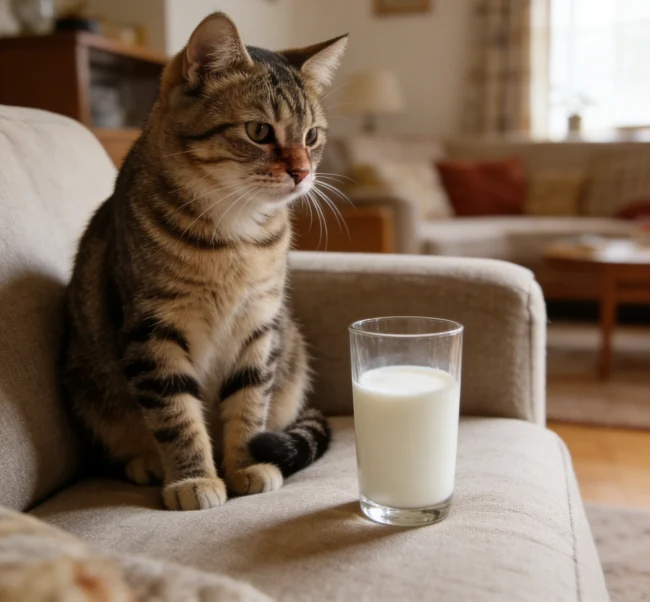
The rule against cow’s milk is clear, but what about exceptions or special cases? Here’s a breakdown of common questions.
Kittens: Kittens should only drink their mother’s milk or a commercial kitten milk replacer (KMR) specifically formulated for their nutritional needs. These products are lactose-free or contain easily digestible ingredients. Never give a kitten cow’s milk, as it does not provide the right balance of nutrients and will almost certainly cause severe diarrhea and malnutrition.
Other Types of Milk: It’s a common belief that alternatives like goat’s milk are safer. The reality is that all mammalian milk contains lactose. Goat’s milk has slightly less lactose than cow’s milk, but it is still enough to cause problems for a lactose-intolerant cat. “Lactose-free” cow’s milk, designed for humans, has the lactose sugar pre-broken down. While it may not cause digestive upset, it is still nutritionally inappropriate—high in fat and calories without any benefit for your cat.
Fermented Dairy (Yogurt, Kefir, Cheese): This is a more nuanced area. The fermentation process uses bacteria to consume much of the lactose. Small, infrequent amounts of plain, unsweetened yogurt or a crumble of hard cheese (like cheddar) may be tolerated by some cats. However, these should be considered rare treats, not dietary staples, due to their fat and calorie content.
For a clear, at-a-glance comparison, refer to the table below:
| Beverage/Food | Lactose Content | Risk Level for Cats | Vet Recommendation |
|---|---|---|---|
| Cow’s Milk | High | High – Likely digestive upset | Avoid |
| Goat’s Milk | Moderate | High – Still problematic | Avoid |
| Lactose-Free Cow’s Milk | None | Moderate – Nutritionally empty, high in calories | Not recommended |
| Commercial “Cat Milk” | None (lactose-free) | Low – Formulated as a treat | Okay in strict moderation |
| Plain Yogurt (tiny amount) | Low | Low-Moderate – May be tolerated as a rare treat | Proceed with extreme caution |
| Mother’s Milk / KMR | Appropriate for species | Essential – For kittens only | Required for orphaned kittens |
What to Give Your Cat Instead: Safe and Healthy Alternatives
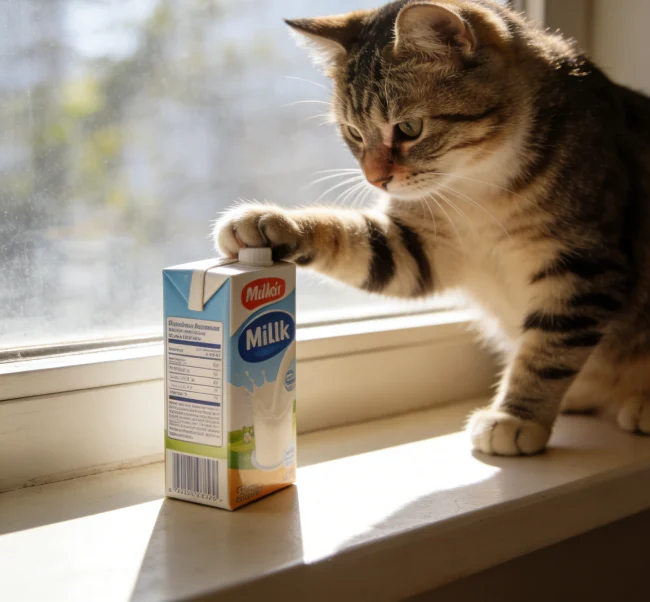
Your cat’s primary and only necessary drink is fresh, clean water. This should always be available. To encourage hydration, consider a cat water fountain, as many felines prefer running water.
For those times you want to offer a special, creamy treat, safe alternatives exist:
My Cat Drank Milk! What Should I Do Now?
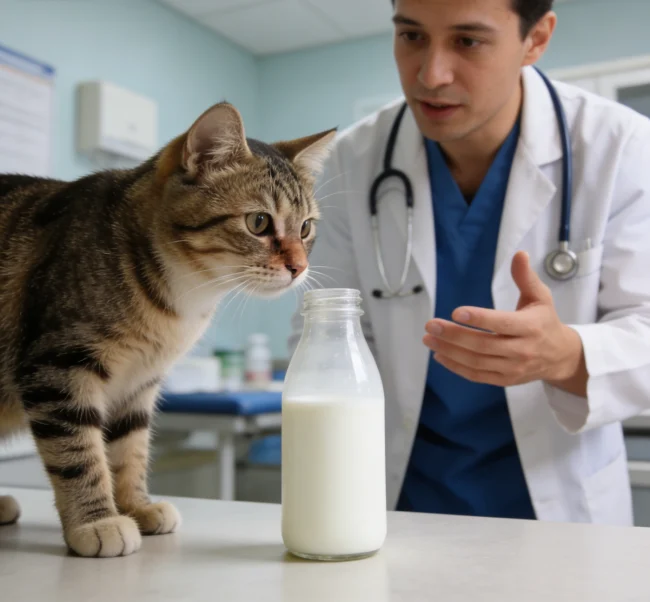
Accidents happen. If your cat snuck a few laps from your cereal bowl, don’t panic. Follow this protocol:
Frequently Asked Questions (FAQ)
Q: Is a little bit of milk really that bad?
A: While a tiny taste likely won’t cause harm, it offers no nutritional benefit and introduces risk. Consistent small amounts can lead to chronic digestive issues, weight gain from excess calories, and nutritional imbalances. It’s best to avoid it entirely.
Q: My cat loves cheese. Is that safe?
A: Hard, aged cheeses like cheddar, Swiss, or parmesan contain very little lactose. A small crumble as a very rare treat is usually fine for most cats. Avoid soft cheeses (like brie or cream cheese) and never give cheese with herbs, garlic, or onions.
Q: What about cream or ice cream?
A: No. Cream is high in fat and lactose. Ice cream is high in sugar, lactose, and often contains toxic ingredients like chocolate or xylitol (an artificial sweetener). Both can cause pancreatitis and severe digestive upset.
Q: I’ve given my cat milk for years with no problems. Why?
A: A very small percentage of cats retain enough lactase enzyme into adulthood to digest lactose. However, this is the exception, not the rule. Even if no acute symptoms appear, the high fat and calorie content can contribute to obesity over time.
Q: How can I get my cat to drink more water instead?
A: Try a cat water fountain, as many cats are attracted to moving water. Place multiple water bowls away from their food and litter box. You can also add a bit of water or a safe broth to their wet food.
Q: Are plant-based milks like almond or oat milk safe for cats?
A: Not recommended. They often contain additives, sweeteners, and thickeners that can upset a cat’s stomach. Some, like almond milk, offer no nutritional value for cats and can be high in oils.
Q: Why do cats seem to be attracted to milk then?
A: They are attracted to the high fat and protein content, which smells appealing. It’s an instinctual draw to a calorie-rich food source, not an indication that it’s good for them.
Q: What should I feed an orphaned kitten?
A: Never give cow’s milk. You must use a commercial kitten milk replacer (KMR) from a pet store or vet. Feeding requires specific bottles, schedules, and techniques—consult a veterinarian immediately for guidance.
In conclusion, while the image of a cat and milk is enduring, modern veterinary science is clear: cow’s milk is not a suitable drink for our feline companions. By understanding the biology of lactose intolerance, you can avoid unnecessary discomfort for your pet. Prioritize fresh water, explore safe commercial treat alternatives, and save the creamy snacks for yourself. Your cat’s health and happiness depend on informed choices, and choosing to skip the milk is one of the simplest and most important ones you can make.

Related Products
Blue Buffalo Wilderness High-Protein Cat Food
Blue Buffalo Wilderness Nature's Evolutionary Diet High-Protein, Grain-Free Natural Dry Food for Adult Cats is…
Purina Cat Chow Naturals Dry Cat Food 13 lb
Purina Cat Chow Naturals With Added Vitamins, Minerals and Nutrients Dry Cat Food, Naturals Original,…
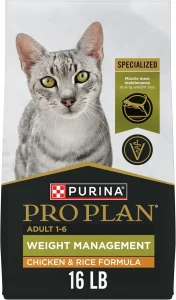
Purina Pro Plan Weight Management Cat Food
Purina Pro Plan Weight Management Chicken and Rice Adult Formula Dry Cat Food is a…
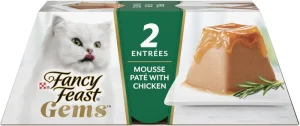
Fancy Feast Gems Chicken Pate Cat Food 8 Pack
Fancy Feast Gems Pate Cat Food Mousse with Chicken and a Halo of Savory Gravy…
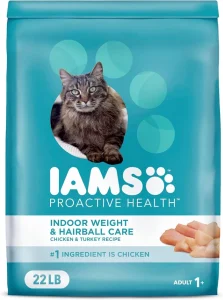
IAMS Indoor Weight & Hairball Cat Food
IAMS Proactive Health Indoor Weight Control & Hairball Care Adult Dry Cat Food is specially…
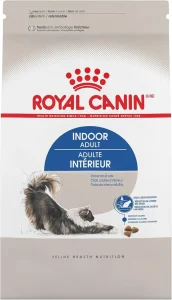
Royal Canin Indoor Adult Dry Cat Food – 7 lb
Royal Canin Feline Health Nutrition Indoor Adult Dry Cat Food is a premium formula designed…
Related Articles
 Cat Food & Treats FAQ
Best Cat Food for Hyperthyroidism: Expert Tips & Guide
 Cat Food & Treats FAQ
Best Cat Food for Digestive Problems: Expert Guide 2026
 Cat Food & Treats FAQ
cat food for bad teeth
 Cat Food & Treats FAQ
Best Cat Food for Dental Issues: 2025 Expert Guide
 Cat Food & Treats FAQ
cat food for pancreatitis: A Veterinarian-Approved Guide to Nutritional Management and Diet Selection
 Cat Food & Treats FAQ